
THE FIRST SHAPE OF LIBERATING
Maggie Zhu
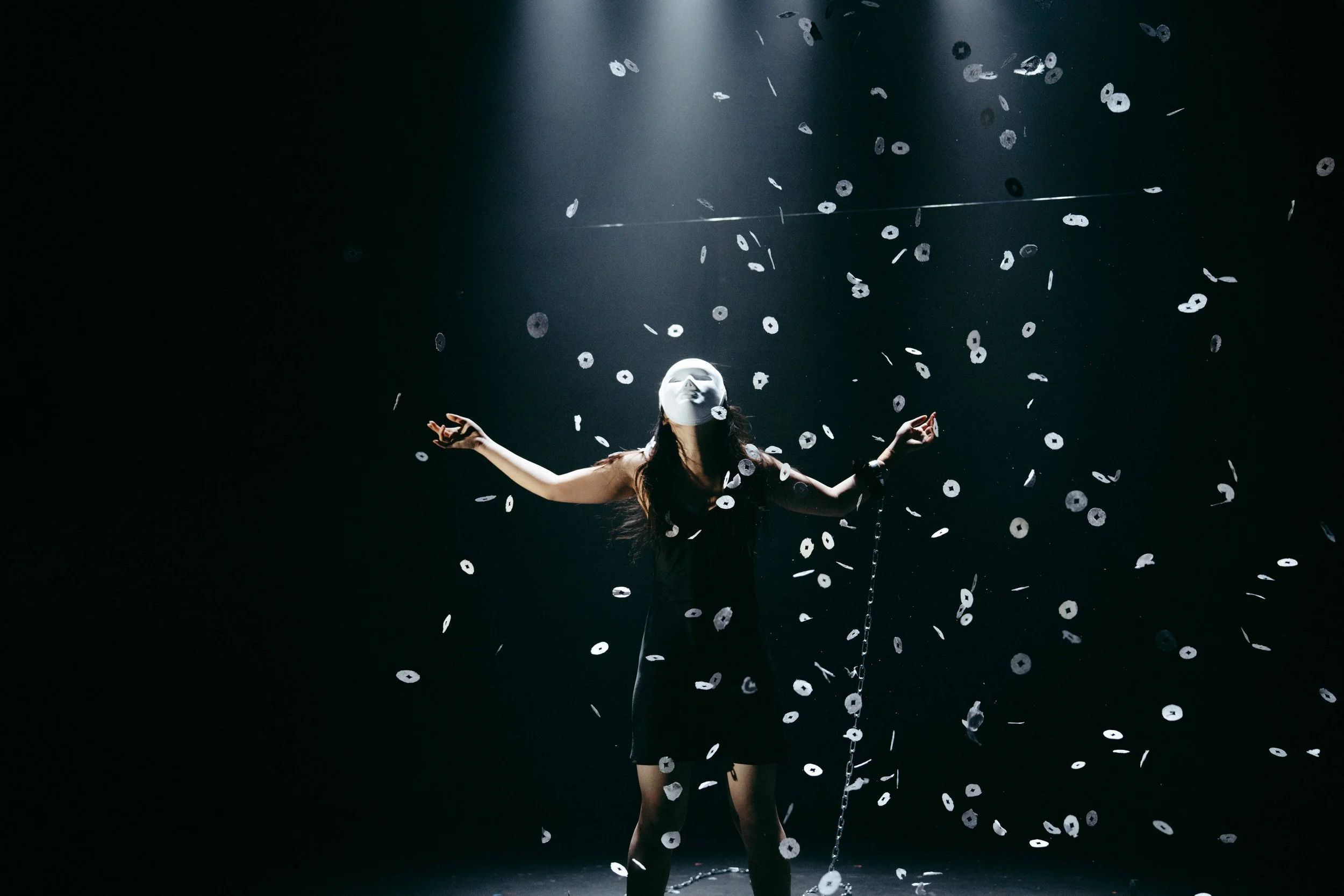
LIBERATING: She Dances (in chains) is a recent production I have been working on as part of the production team. When I first photographed the work during its earlier stage of production last year, it was still finding its shape, and I entered the performance without a full explanation of its structure. It was already visually striking, with chains, masks, tension, and moments of stillness cutting through movement. What stayed with me was the difficulty of holding it in an image.
As a solo performance, LIBERATING places its emphasis on the body. The work includes monologue, recorded audio, and brief spoken responses, yet its central language is movement. Most of my past theater photography has been shaped by plot, dialogue, and acting, where images often retell the story through key moments, expressions, and interactions. With LIBERATING, I found myself working differently from the start. Without multiple characters or dialogue constantly guiding the audience through the narrative, I had to translate what I was seeing while still trying to understand it. I was photographing meaning through the body itself: through gesture, rhythm, posture, stillness, pressure, and the space between movements.
Created and directed by Xiaoyao, LIBERATING begins with a question: what does freedom mean when a body has already grown used to moving within restriction? The work draws from the Chinese phrase “戴着镣铐跳舞,” often translated as dancing in shackles. For Xiaoyao, freedom is shaped through structure, pressure, resistance, and choice. It is a bodily practice rather than a clean escape from limitation.
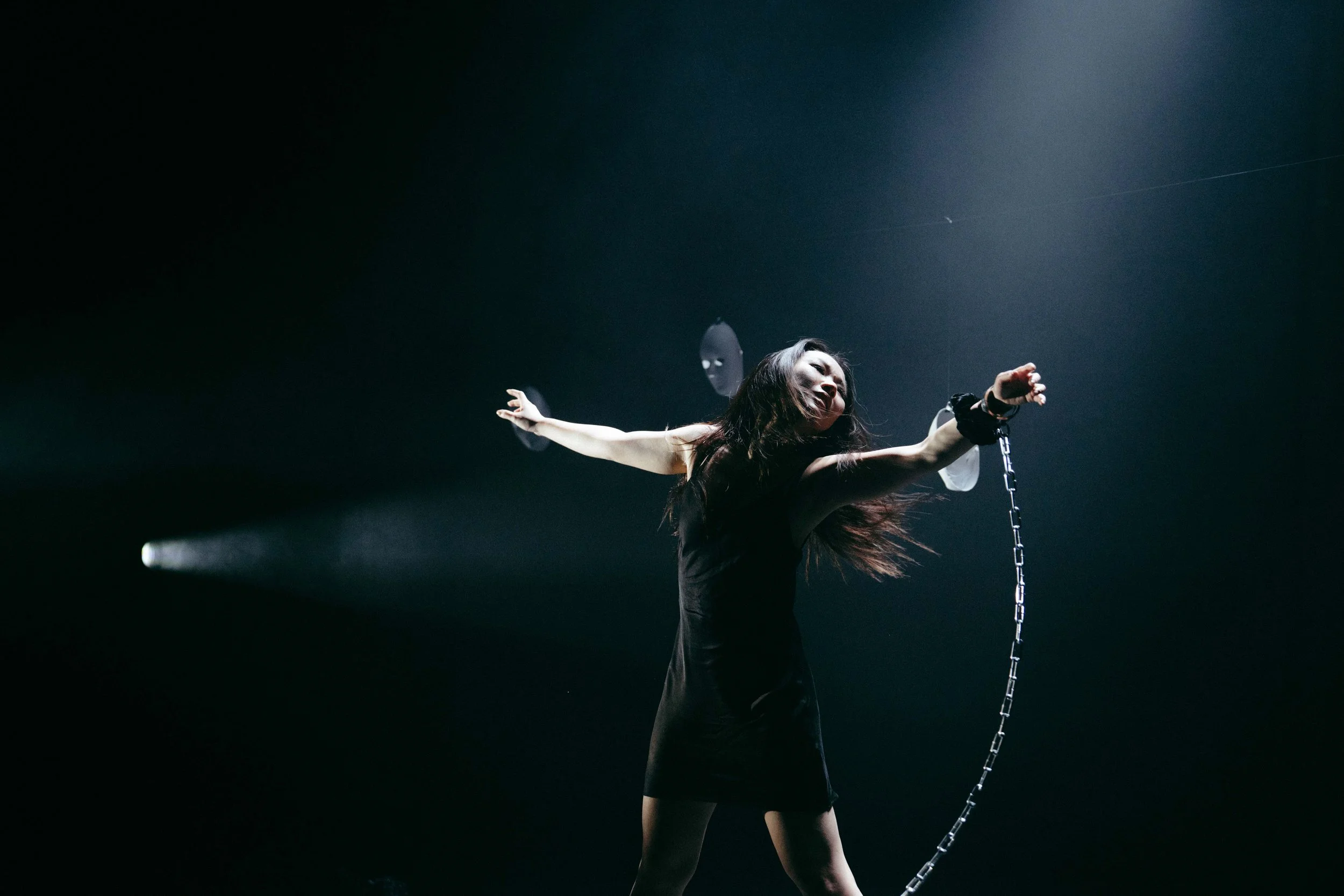
Photo: Maggie Zhu
This question sits at the center of the project. The chains in the work are not decorative props nor seemingly romantic symbols of suffering. They carry weight, sound, interruption, and a violent social memory. In performance, they become both material and situation, producing restriction while representing it, and forcing the body to negotiate with them in real time.
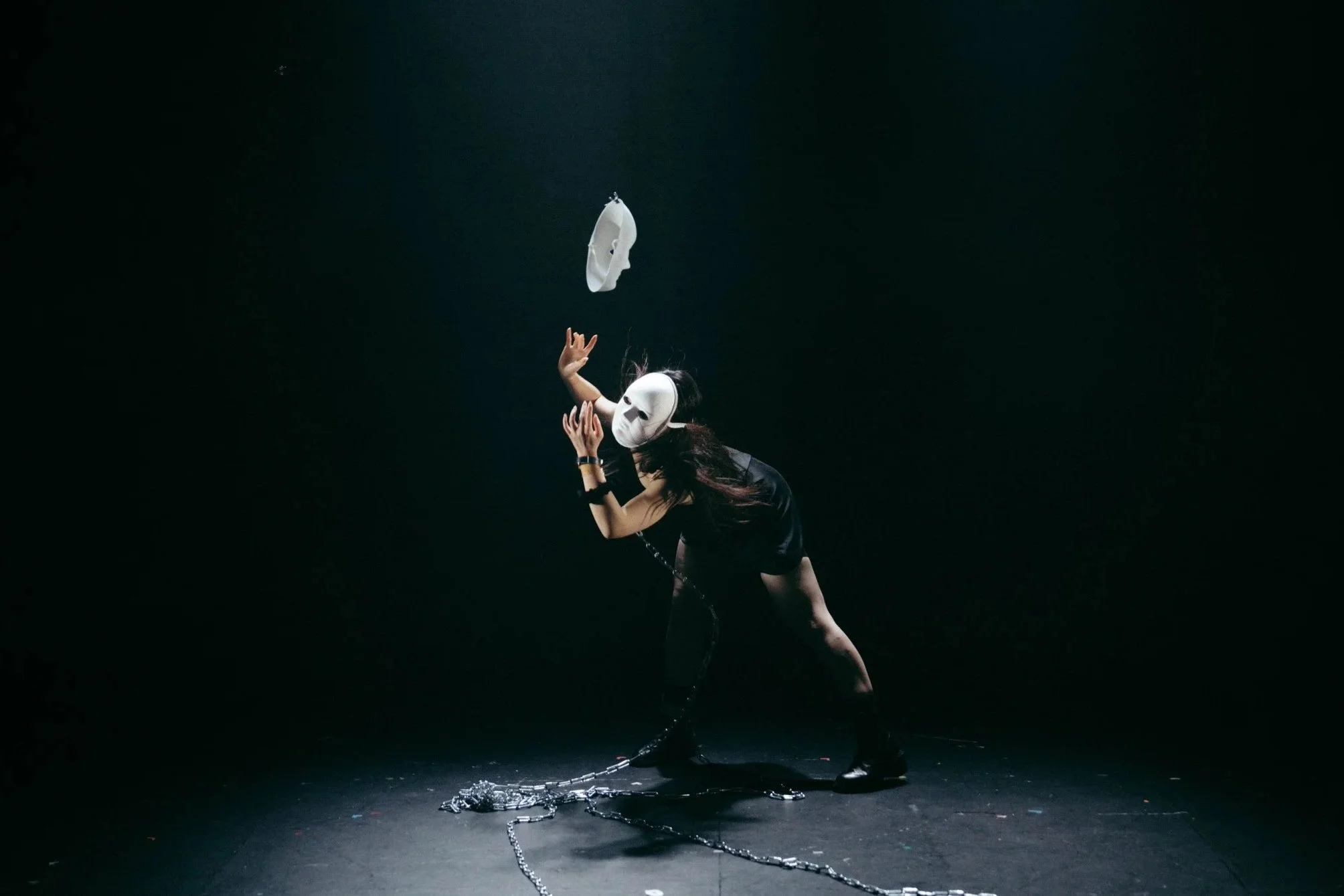
Through the camera, and even more through the room itself, this became immediately clear. The chains were long enough to allow Xiaoyao to keep moving, yet every small shift of the body brought a large metallic sound into the space. In a small theater, with her body unamplified, the noise of the chains became impossible to ignore. They marked each gesture, each step, each change of weight. In a movement piece where the body needs room, breath, and freedom to dance, the chains made their presence loud before they became visibly restrictive. Their restraint was felt through accumulation: sound after sound, movement after movement, until the body seemed unable to exist apart from what it carried.
Photographing the piece pushed me to reconsider my own habits as a theater photographer. I rarely use slow shutter speed in production photography, because theater images often need clarity: who is present, what the production looks like, and what kind of moment is unfolding. In plot driven performances, I often look for clean images that can hold a scene together.
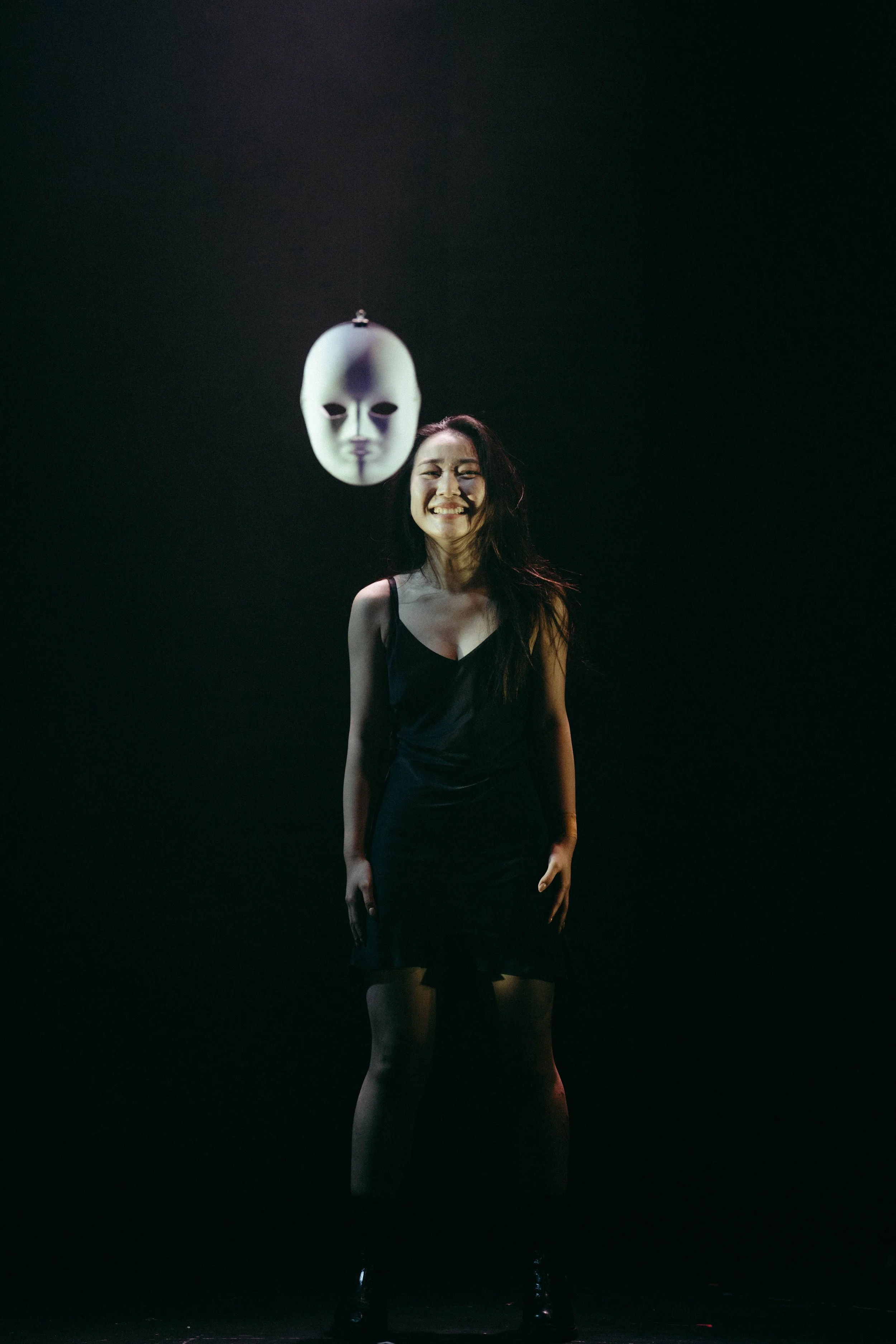
Photo: Maggie Zhu
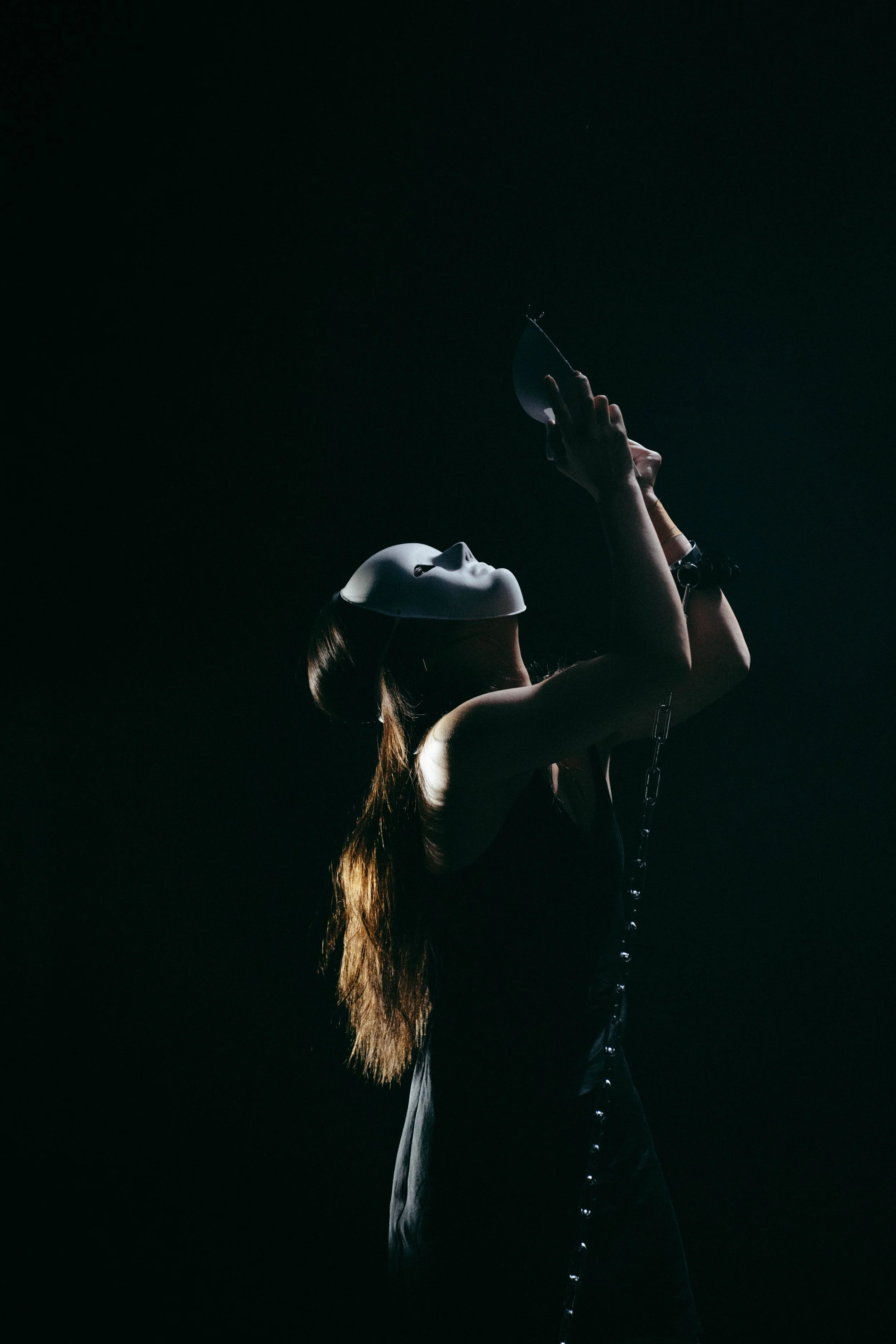
Photo: Maggie Zhu
With LIBERATING, I felt more room to move away from that approach. Since the work is carried so strongly through the body, movement blur became less like a technical risk and more like a way of staying close to the piece’s own language. A fully frozen image could show the shape of Xiaoyao’s body, the chains, or the mask, while a slower image could hold something of the force passing through them. It allowed the image to register rhythm and pressure, especially in moments where the body seemed to move between discipline and release.
The simplicity of the space also changed how I looked through the camera. With few objects on stage beyond the body, the masks, and the chains, the black backdrop became an active part of the image. Instead of filling the frame with scenic detail, I found myself paying attention to distance: how much darkness to leave around the body, and how the chains could cut through that space as both line and sound.
The uncertainty I carried from walking into the performance without knowing the full structure became part of my creative process. In a production with several characters and dialogue, the story often gives the photographer a clear path to follow. Here, meaning arrived through repetition, movement, objects, sound, and the changing state of the body. I was translating what I saw into images while still trying to understand it. The photographs became attempts to read a body thinking through restriction in real time. I had to choose which moments might carry the emotional and conceptual weight of the work: when to follow clarity, when to stay with ambiguity, and when to let the body remain unresolved.
Now, as LIBERATING continues to develop through further research, rehearsals, and collaborations, these first images feel like an opening chapter instead of a finished record. They remind me that photographing the work meant finding images that could hold its tension: the sound of chains, the pressure on the body, and the uncertain shape of freedom as it was being worked through on stage.
This article is part of the PRISMA Editorial Series ‘Stages of Motion’