
RESISTANCE AGAINST FORGETTING
Devon MacMillan
It is four-thirty in the morning. The sun is assembling itself behind a rugged treeline, a slow burn of gold spreading across the sky like something being remembered rather than begun. There are no commitments here, no competing demands; only the bush in its oldest form, unhurried and indifferent, and somewhere within it, a thousand creatures going quietly about the business of surviving another day. This is Kruger National Park. Just me and my camera. No guide, no itinerary, no guarantee of anything. This is exactly why I return.
My family left South Africa when I was very young, exchanging the Southern Hemisphere heat for the somewhat predictable greyness and rather damp certainty of the UK. But there is a manner of leaving that is never truly departure, and ours was that kind. Every year, without exception, we go back, to friends, to family, and importantly to Kruger. South Africa's largest wildlife reserve, roughly the size of Wales, has served as the backdrop to many of my most timeless memories. At some point in those annual pilgrimages, I began using my mum's digital camera, and with time invested in my own. I simply could not imagine the journey without one.
Photography, for me, did not begin as a technical discipline. It began as an act of resistance against forgetting. The quality of light at five in the morning when your vehicle is first through the gate. The way an elephant moves through dense woodland with a silence that feels like a violation of physics. The relief of breaking a five-hour drought with a ten-second leopard sighting. These things cannot be folded into a suitcase, but they can be approached, approximated, held at arm's length in a frame, if one is patient enough, and occasionally fortunate enough.
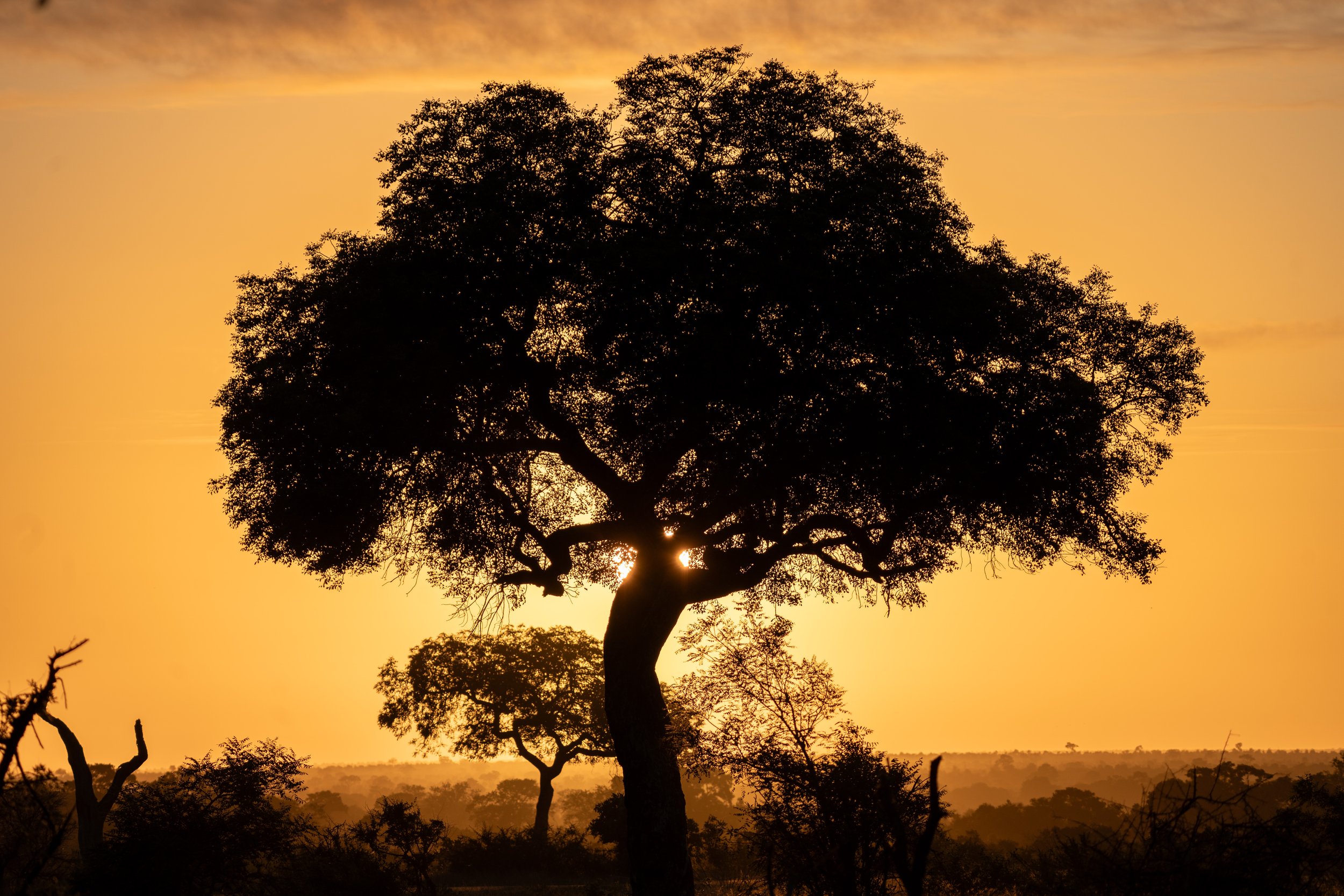
The image I return to most often was not taken in proximity to any animal. It required no patience in the conventional sense, no hours beside a riverbed, no engine switched off, no waiting. It required only being present at the right moment, with the presence of mind to recognise what was unfolding before me. A single acacia, silhouetted against a sky turned the colour of molten copper, positioned by chance or providence directly in front of the setting sun, the entire disc of it framed within the canopy as though placed there deliberately. The bush stretched away on every side into darkening gold. Nothing moved. I took the photograph and sat for a long time afterwards without touching the camera, which is, I have come to think, its own kind of answer to the question of why I keep coming back.
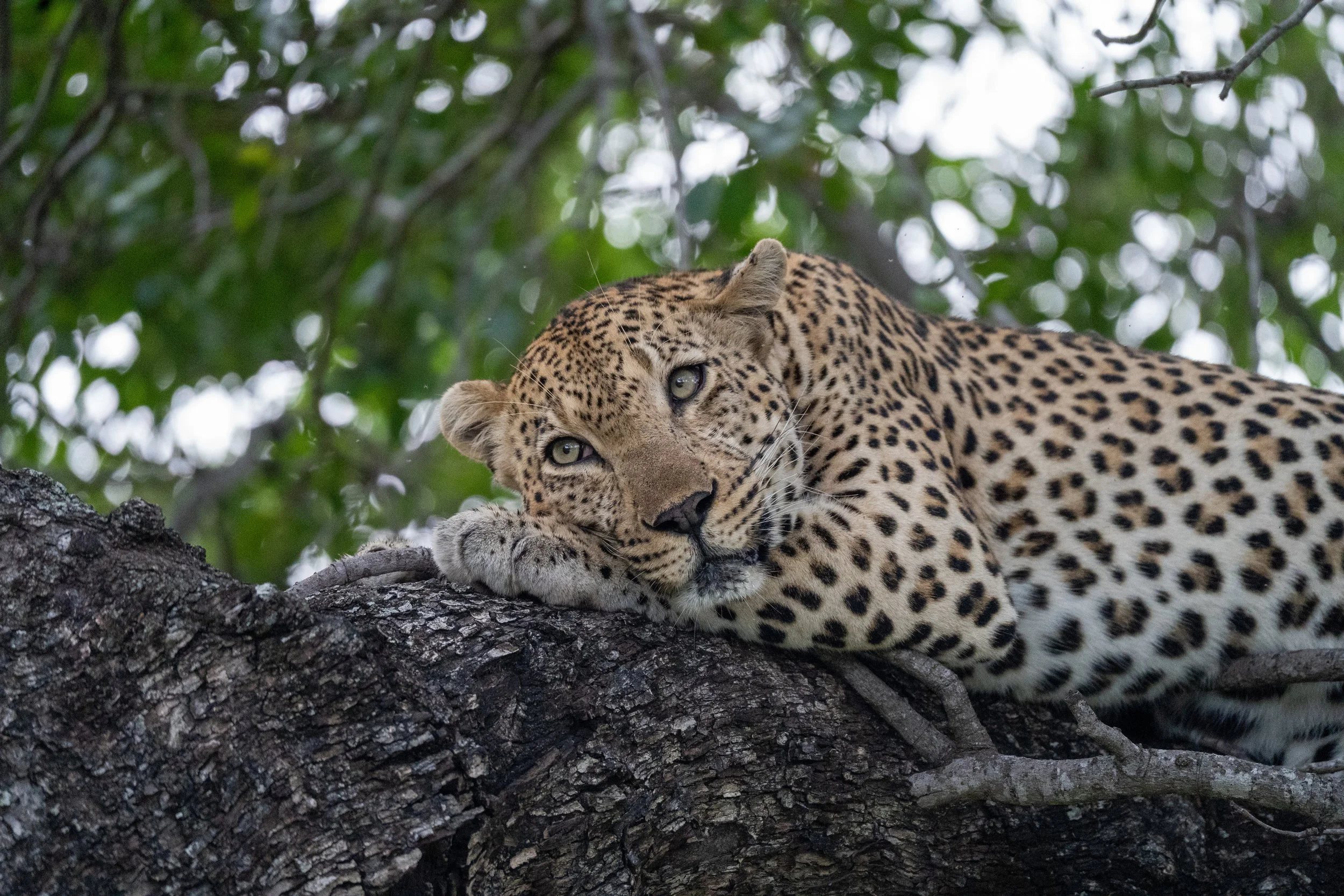
The second image arrived in stillness rather than drama. A leopard draped across the broad limb of what I have come to call a leopard tree, any tree with a perfectly positioned branch to cradle one, as close to your vehicle as possible. This leopard was found exactly as you want to find them: doing nothing whatsoever. After watching her sleep for some time, she woke, rested her chin on her paws, and surveyed the proceedings below, at times holding my gaze with an unsettling and magnificent patience. It was a gift from the park, a remarkable sighting merely two kilometres from our exit after a week of nothing quite like it.
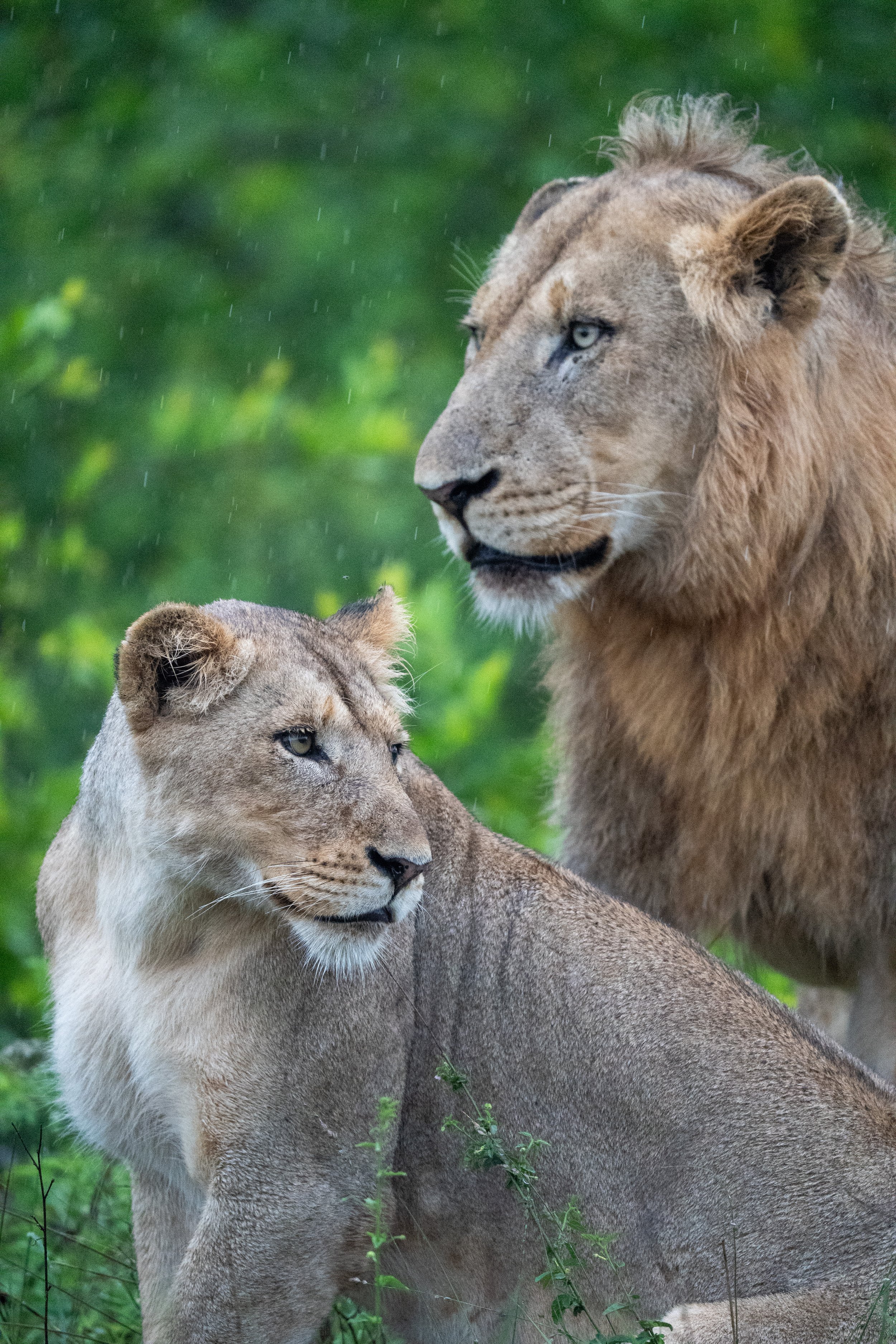
This, I believe, is the argument for the self-drive safari that tends to go unmade. It is slower than the guided game drive, placing the full weight of decision upon the person behind the wheel, when to stop, when to move, when to wait. But it is precisely that weight that makes it so completely absorbing. Passivity is not available to you. You are reading the landscape constantly: scanning the treeline, parsing shadows, learning, gradually, across many seasons, to truly see the bush rather than simply look at it. A hired car and a park entry permit are sufficient to bring you through the gate. Kruger's rest camps offer accommodation across a broad range of budgets, from camping spots to chalets, no specialist operator or private lodge required. Just time, patience, and a willingness to sit beside a dry riverbed for longer than comfort would ordinarily allow.
Wildlife photography has taught me that the images I value most are almost never the ones I arrived intending to make. They are the residue of consistency, of showing up, of staying beyond the point at which staying feels necessary, of holding oneself open to whatever the bush, in its own time and on its own terms, chooses to offer. Kruger has been making those offers since I was barely old enough to hold a camera level. I have little doubt it will continue to do so for a long time yet.
This article was first published in PRISMA’s Newsletter on the 12th of August 2026.