
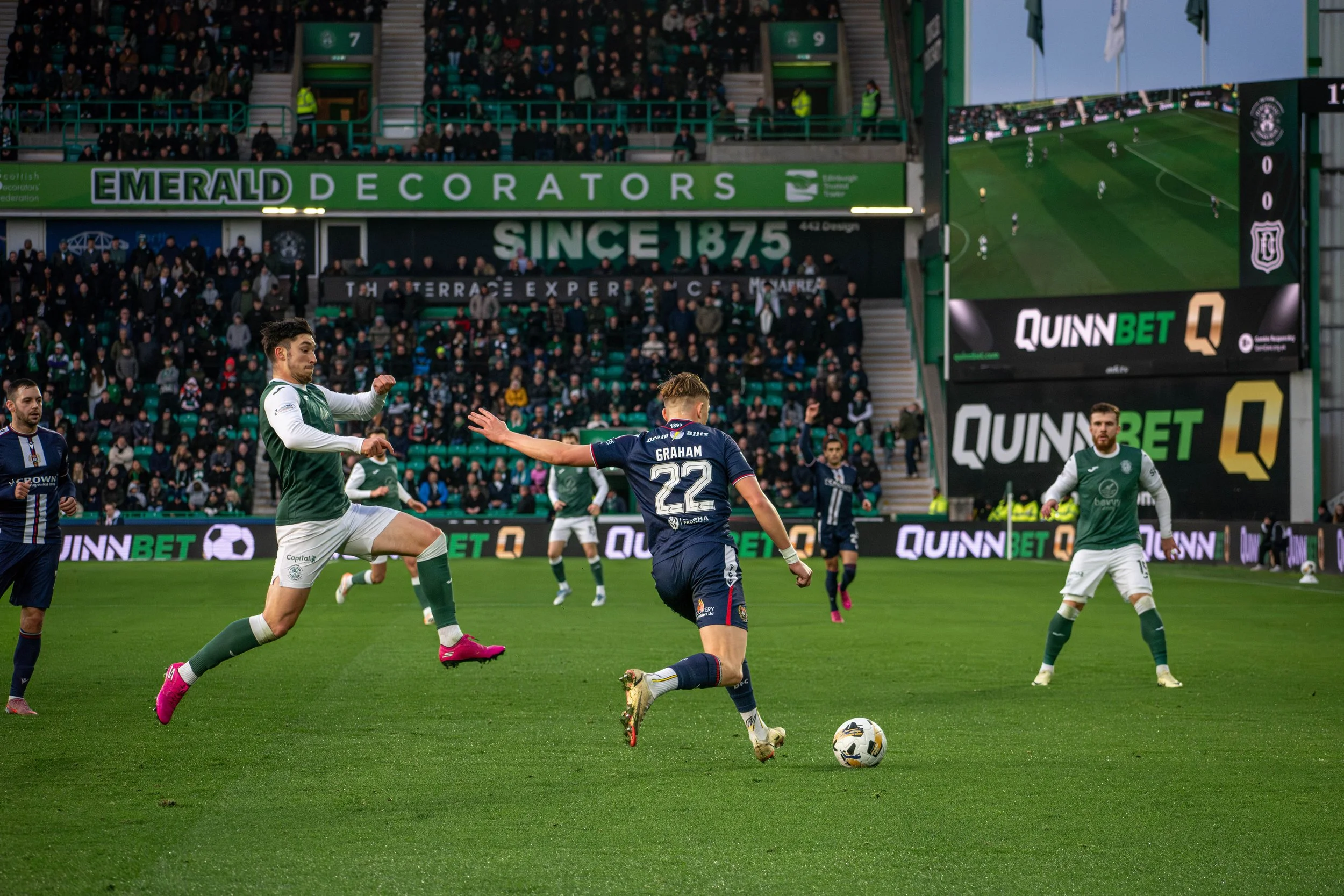
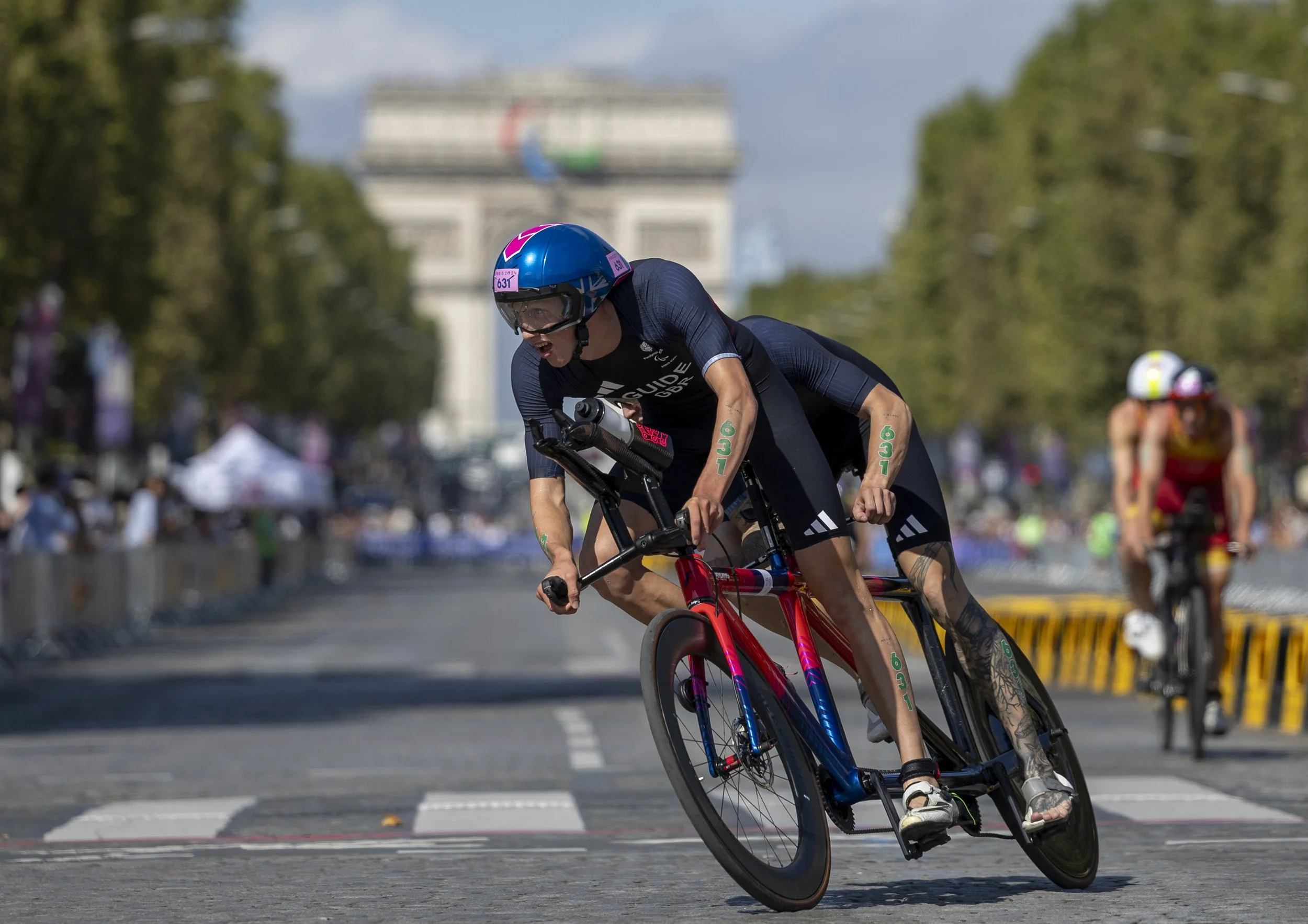
Photo: OIS/Hassan Wamwayi
PICTURE BETTER COVERAGE
With special thanks to our interviewees: GB Para Dressage Gold Medallist Sophie Christiansen CBE, IPC Brand and Communications Officer Craig Spence, GB Para Badminton World Champion Rachel Choong, and Paralympic Photographer Samantha Hurley.
Louise Anderbjörk
In 2024, Team GB left the Paris Paralympic Games as the second best nation in the world. This is an incredible feat and yet media engagement with para sport in the UK remains low. In sports journalism as a whole, visual storytelling is a crucial asset to creating successful coverage, and it is time to ask what influence more widespread photojournalism could have on closing the gap in para sport coverage.
Looking back at the London 2012 Paralympic Games to start with, the impact of the trailblazing broadcasting coverage during these games shows the importance of visual story telling in broadening the reach of para sport. “The Channel 4 coverage was a game changer” Sophie Christiansen CBE recalls from London 2012, where she won her eighth Paralympic gold in Para Dressage. “London was the first time that the whole country knew about the Paralympics, and that was thanks to the media”
Partnerships with public broadcasters such as Channel 4 was a core part of the International Paralympic Committee’s (IPC) strategy to make London the games where paralympic sport was repositioned in the public mind. “Paralympians are high performance athletes, they train as hard as anyone else” Craig Spence says as Brand and Communications Officer of the IPC, and focusing on broadcasting success at London 2012 was a key element of showing that to the public.
While a focus on strengthened broadcast coverage of para sport over the past decades has led to an important 127% increase in TV audiences of the Paralympic games, Team GB para badminton Player and ten time world champion Rachel Choong stresses that “there is still more to be done. The coverage of para sport isn’t always there - it’s very inconsistent”. One of the biggest issues remains strengthening the coverage of para sport in print media.
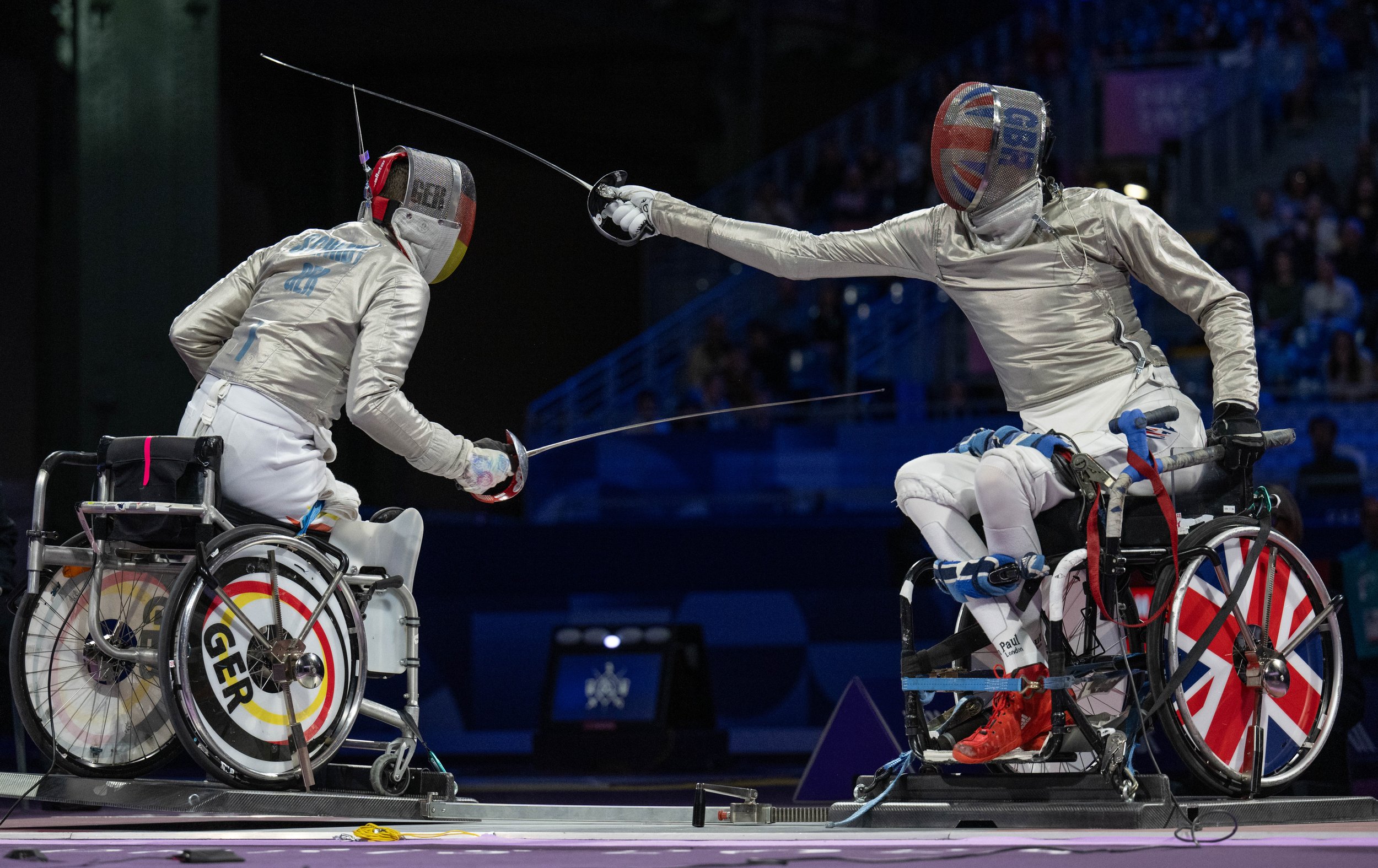
Piers Silver GBR and Maurice Schmidt GER in the Wheelchair Fencing Men’s Sabre Category A Gold Medal Match, Paris 2024. Photo: OIS/Joel Marklund
Can photography bring the visual success of broadcasting into print coverage of para sport?
“High quality photography is the audience's expectation of sport coverage in media” says Samantha Hurley, a legally blind photographer who covered the Paris 2024 Paralympics. “Giving people the option of seeing high-quality coverage of these sports will of course increase readership interest, because para sport is interesting”.
However, the issue remains that para sport receives far less professional photographic coverage than able-bodied sport and without it, stories of disabled sport featured in media attract less engagement, leading to smaller budgets being allocated to para sport coverage. “The amount of requests we were getting from smaller titles around the world saying ‘we want to cover the Paralympic games but we don’t want to pay for any images” Craig Spence recalls from the lead up to Rio 2016. “It was so frustrating, because they didn’t see the value in Paralympic sport”
To break down this financial barrier to producing engaging visual storytelling of para sport in print media, the IPC started OIS Photos, providing free professional images from the Paralympics to any publication with an interest in writing a story on the games.
“Seeing is believing”, Craig continues, and it is the responsibility of editors and journalists to utilise photography to offer audiences the platform in print media to discover para sport like they do able-bodied sport.
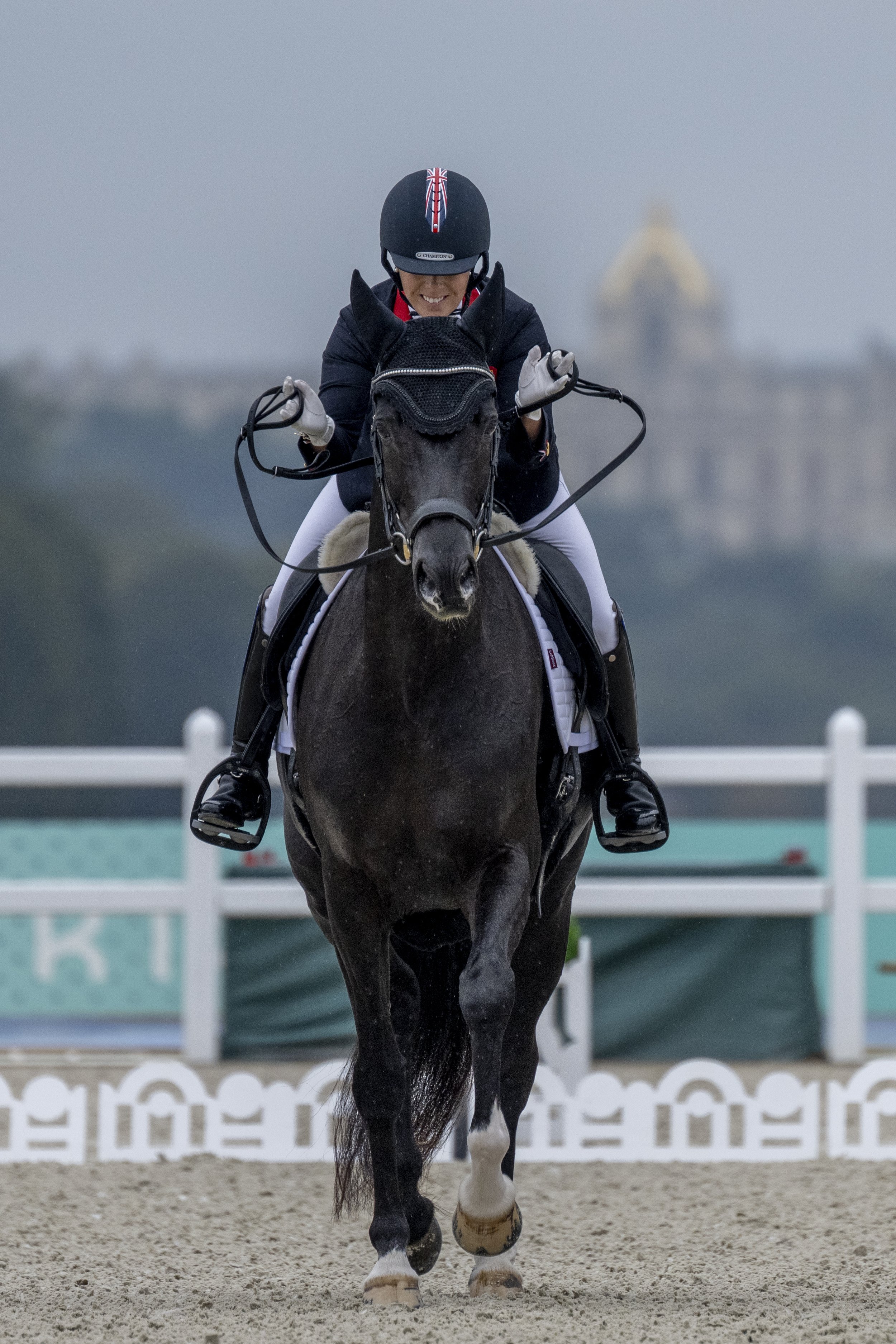
Sophie Wells in her Para Equestrian Freestyle, Paris 2024. Photo: OIS/Louise Raymond
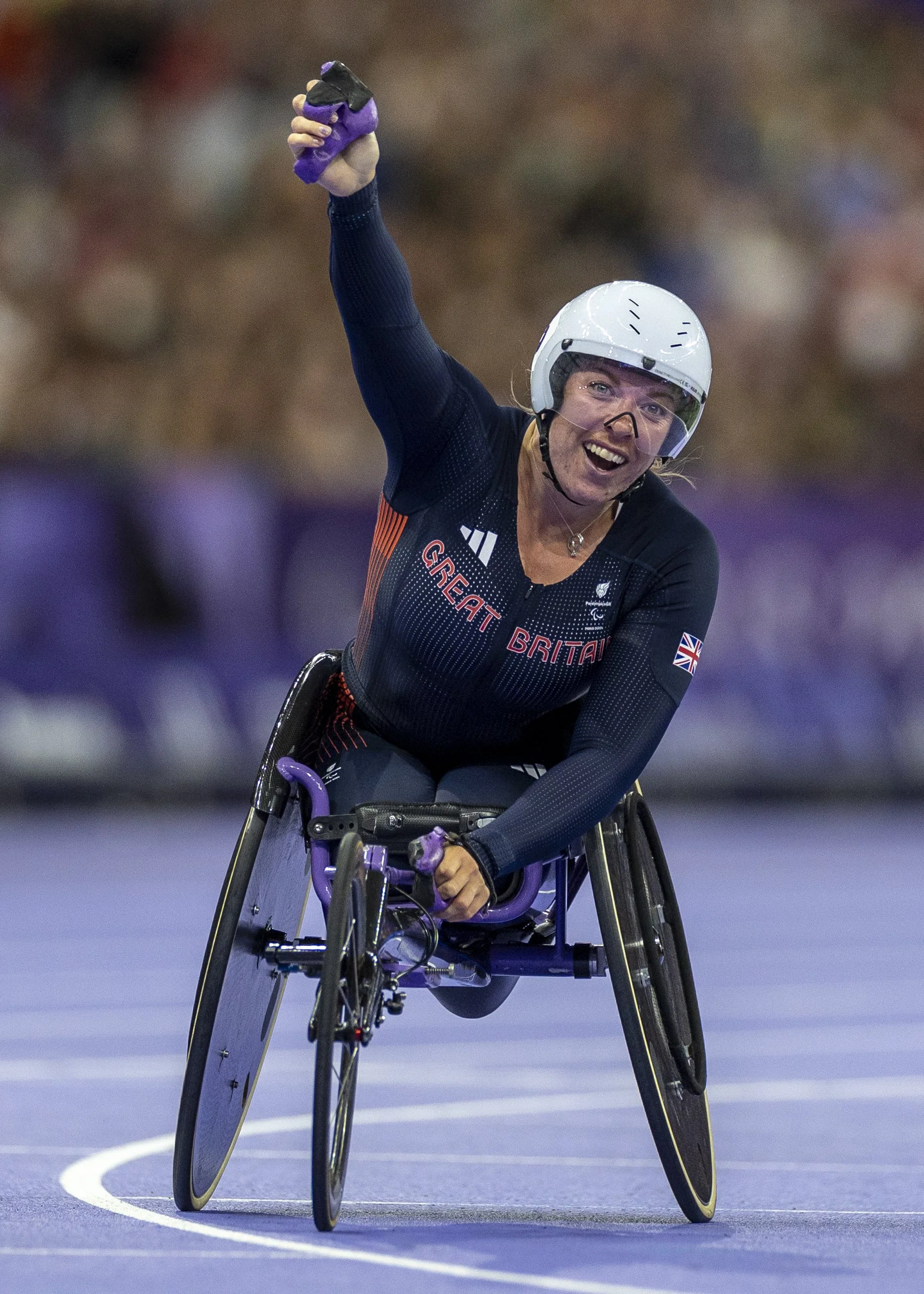
Para Athletics Gold Medallist Hannah Cockroft at Paris 2024. Photo: OIS/Ariana Suarez
What steps can journalists take to ensure photographic coverage of para sport is inclusive and authentic?
The short answer is that the media needs to shift its focus in para coverage from sensationalising disabilities to normalising them. As Samantha Hurley put it in her Tedx talk earlier this year: “Stories like mine should not be inspirational, they should just be accepted”.
The photographs you include in a story is a crucial part in driving the normalisation of para sport. “Our athletes don’t want pity, they want plaudits for their achievements, and getting that right with photographers is really important for us” Craig Spence clarifies on behalf of the IPC. Samantha Hurley believes the key to such authentic coverage as a sports photographer is to simply “prioritise neutral representation” of the event you are working and “not be afraid to take photos of a disabled person in the same way you would anybody else”.
Alongside adopting the right photographic techniques, the written context in which you use photos of para sport is equally important. If authentic photographic coverage of para sport is featured in a story focused on the athlete’s overcoming of their disability rather than their high performance achievements, it defeats the purpose of photojournalism as a tool for change in para coverage. As Rachel Choong puts it: “While para sport needs to be celebrated for being different to able-bodied sport, it would be great for it to be covered in media in the same way.”
To avoid repeating the media’s tendency to sensationalise paralympic stories, Samantha urges journalists to start looking local and highlight the many para sport achievements happening right around them but that are currently being overlooked. Craig adds that modern audiences predominantly follow sport because they are invested in the athletes themselves, and suggests journalists start building stronger para athlete profiles in their coverage to better sustain readership. Together, these two approaches would present immense advancement towards tackling one of para sport’s biggest coverage gaps: keeping it in the media beyond the Paralympic Games alone.
However, Craig highlights that there is one thing that goes above almost everything else in improving para sport coverage: “I want to see more journalists and photographers with disabilities, because only then will we see authentic representation”. This is particularly important given that 23% of disabled people in the UK currently feel that media coverage of the disabled community fails to reflect their experience of living with a disability.
Though, this does not mean that the responsibility to cover para sport lies on disabled reporters alone. Non-disabled journalists must also put in the work to understand para sport as well as they do able-bodied sports to be able to provide authentic coverage all round. To this, Rachel Choong advises: “if journalists and photographers could take some time to spend around para sports, they could gain a better understanding of it, appreciate the nuances and the beauty in it, and therefore better authentically represent the sports and athletes.”
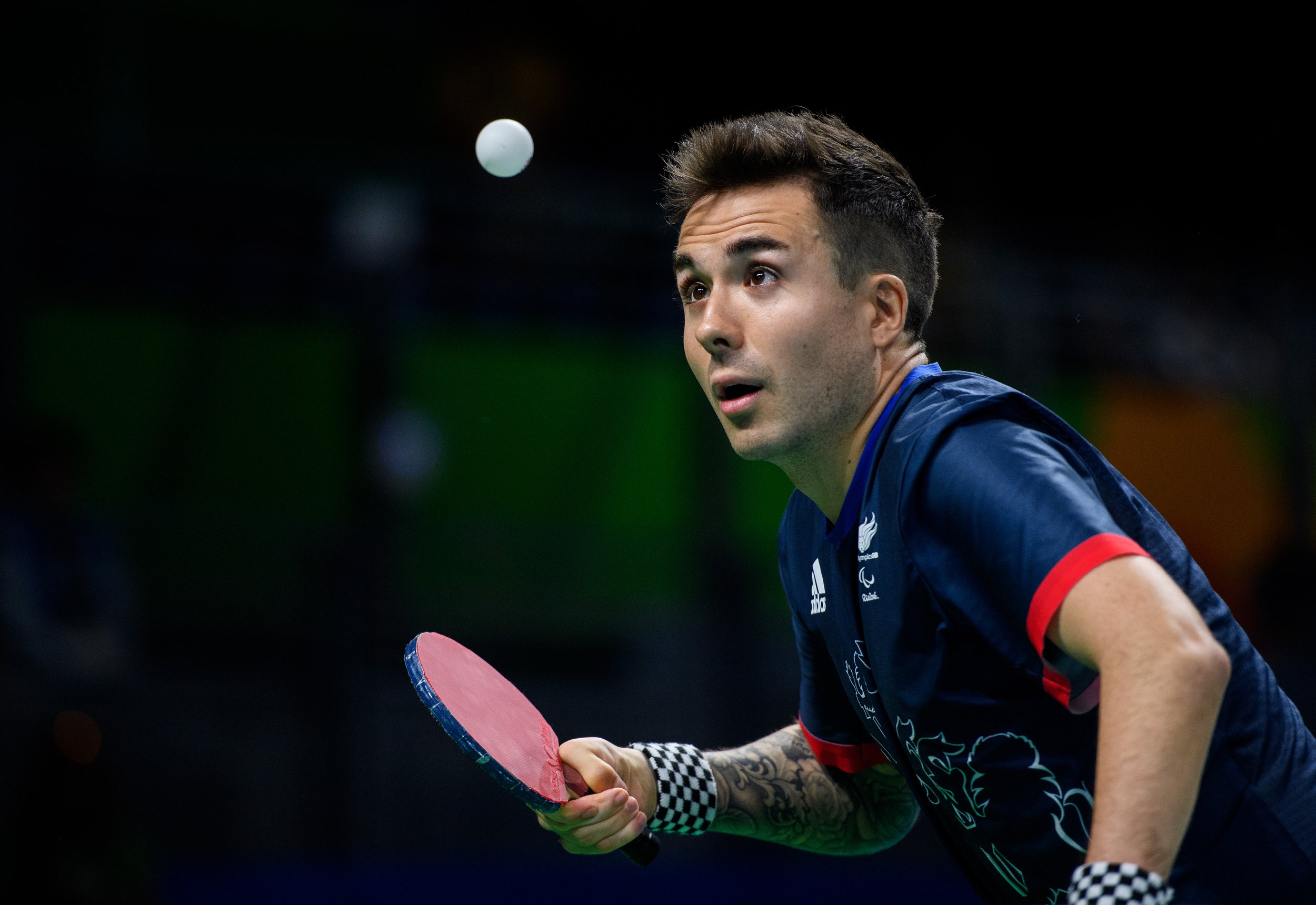
William John Bayley GBR playing the Men’s Singles Class 7 Gold Medal Match at Rio 2026. Photo: Thomas Lovelock for OIS/IOC
What is the importance of covering para sport beyond increased readership figures?
Importantly, using photography to strengthen para sport coverage has an impact far beyond boosting readership. Women’s sport offers a clear example, where increased media attention in recent years has opened up funding and professional opportunities that were previously out of reach.
“I’m an eight time gold medalist and I really struggle to get financial sponsorship”, Sophie Christiansen CBE shares with Journo Resources, “media and sponsorship go hand in hand”. Rachel Choong echoes Sophie’s experience, adding that “I don’t think audiences, and particularly brands, understand the financial gulf between able-bodied and para sport. It’s brilliant to see what equality is finally doing for women’s sport, but I believe it’s time that we start supporting para sport in the same way”. Unlike many Olympic athletes, Rachel’s career as a paralympian is almost fully self-funded, while Sophie similarly maintains a job alongside her athletic career.
Still, the impact of improved media coverage of para sport can reach far beyond financial and professional opportunities too, with the potential to shape wider public perceptions of disability. According to the IPC, 1 in 3 people in Great Britain changed their attitudes toward disabled people after the wide-reaching coverage of the London 2012 Paralympics. Building on this impact, the IPC has launched WeThe15 as an international human rights movement that uses the global platform of sport to advocate for the 1.3 billion people living with disabilities and the discrimination they face daily.
“I don’t think the world realises that 15% of the world has a disability, because they are not visible in society” Craig says when discussing WeThe15. This is where photojournalism plays such an important role in making para athletes and the wider disabled community more visible and represented. As summarised by Samantha: “Photos are really powerful in speaking to people’s subconscious and their confirmation bias. Seeing photos and stories covering disabled people will help normalise disabled stories”.
With the responsibility to cover para sport stretching far beyond increasing readership, what should journalists do going forward?
“I want to see more coverage and I want to see the media portraying paralympic sport as high performance sport, because it is. There are very few people in this world who can run a 100m in 10.8 seconds, probably 1% of the population, and we have athletes with one leg who can do that” Craig shares as his task to sports journalists.
There is a clear disconnect between the demand for following para sport in the UK and the effort and resources that media outlets are putting into covering them. The most important thing to do now is to pick up the pen and the camera and start producing content on para sport, wherever you are and whatever stage of your career you are at. As Sophie once said in an interview with Paralympics GB, “You don’t have to be an expert in every disability. It’s just about understanding and putting in the effort. It doesn’t have to be perfect”
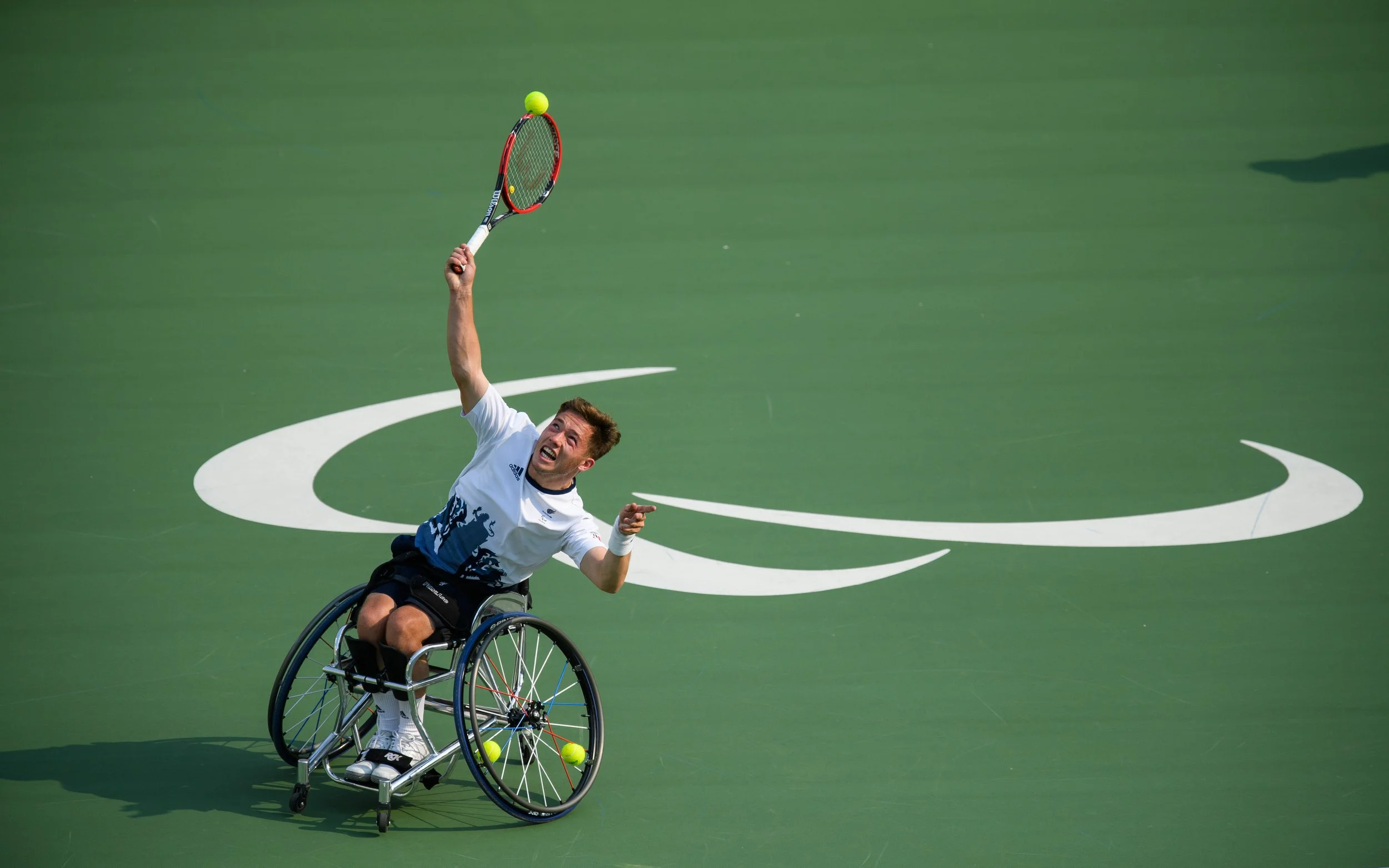
Photo: Bob Martin for OIS
This article is part of the PRISMA Editorial Series ‘Reframing the Game’