
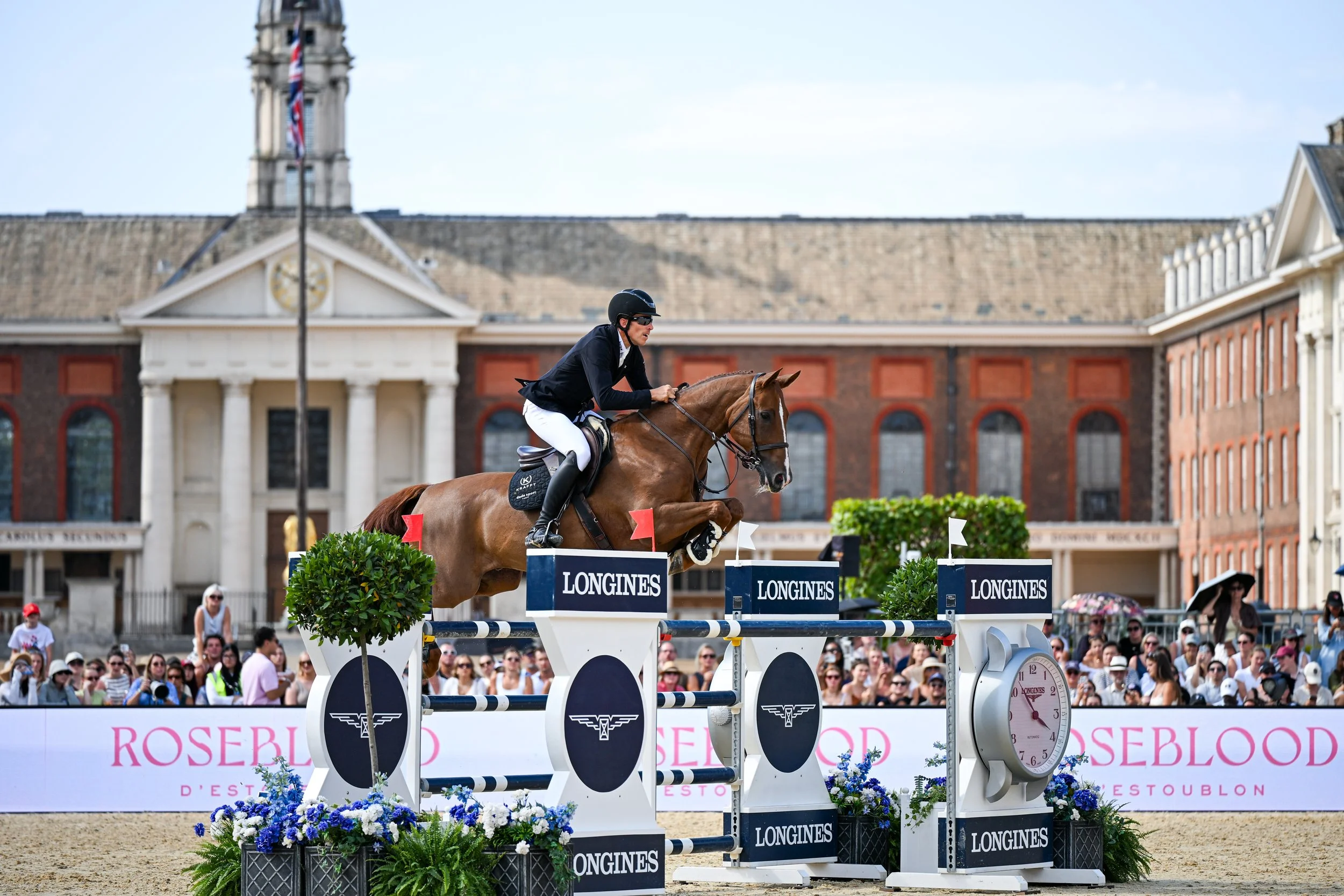
LGCT LONDON 2026
Louise Anderbjörk
The Longines Global Champions Tour is one of the most prestigious competitions in international showjumping, bringing the world's best riders and horses together across some of the most iconic destinations on the global sporting calendar. Spanning four continents and offering more than €36 million in prize money across the tour, the series travels from the Middle East to the Americas and some of Europe's most famous capitals, including Paris, Vienna and, of course, London.
Founded in 2006 by Olympic gold medallist Jan Tops, the Longines Global Champions Tour comprises up to 15 rounds hosted around the world and brings together the top 30 riders in the FEI Jumping World Rankings. The overall tour title is considered the biggest single prize available across the three Olympic equestrian disciplines, while the London leg itself hosts the richest Grand Prix in the UK, with a €1 million prize pot for the winner.
What makes the London leg particularly special, however, is its location. Held on the grounds of The Royal Hospital Chelsea, the event brings elite international showjumping right into the heart of the capital. It is an unusual setting for equestrian sport, but one that creates an atmosphere and photographic backdrop that few other events can match. Instead of being surrounded by the familiar countryside setting of many major showgrounds, the arena sits amongst one of London's most recognisable historic landmarks, including Battersea Power Station that is just a stone throw away across the river Thames.
Harry Kukuk (GER) and Checker 47 in the Logines Global Champions Tour Grand Prix of London. Photo: Louise Anderbjörk
This year's London leg ran from 7–9 August, and I was there on the final day to cover the headline Longines Global Champions Tour Grand Prix of London in the afternoon. There was, however, plenty of world-class sport to photograph before the main event, with five high-value classes running from 8am through to 8pm. The first class of the morning was the CSI2* 1.30m presented by MC Equine Surfaces. Run as a speed class against the clock with no jump-off, it provided an exciting start to the day, with the American Eva Mackenzie taking the win aboard S&L Quaker Hill in a time of 58.69 seconds. With the morning light and the event still relatively quiet, it was also a good opportunity to settle into the surroundings and start looking for photographic opportunities around the arena before the crowds arrived.
The following CSI2* Champagne PIAFF Trophy stepped things up considerably, with a 1.45m course run over two rounds. Of the 29 riders who started, only those producing a clear within the time allowed would progress to the jump-off, and the difficulty of the course became apparent early on as it took some time for the first clear round to come in. By now, the London heatwave was also beginning to make itself felt, with temperatures climbing beyond 30°C, something that would remain a factor throughout the day for both the riders and everyone working around the arena. In the end, Chile's Constanza Hofmann Wagemann produced two clear rounds and won the class with a jump-off time of 34.28 seconds, taking home €25,000.
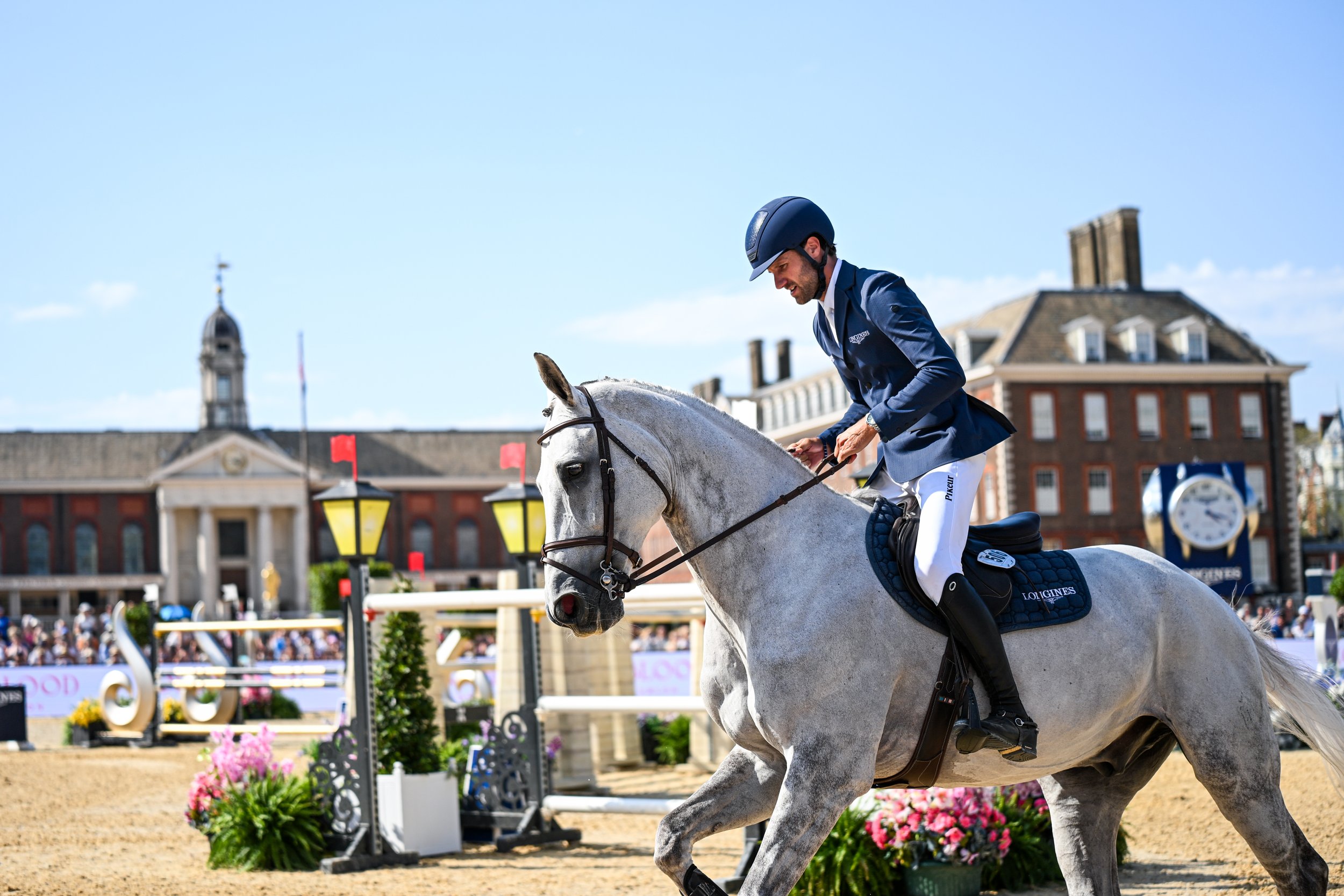
Now, with only an hour left to go until this afternoon's headline event, you could feel the excitement spread across the grounds with more and more spectators filling the stands and eagerly waiting for the world's best riders to take on the biggest class of the weekend. At 3:10pm, the Longines Global Champions Tour Grand Prix of London finally got underway. Belgium's Niels Bruynseels was first into the ring, taking on a 17-fence course set at the full 1.60m height. With 40 of the world's leading horse-and-rider combinations competing, the course posed a real challenge, and by the end of the first round only 14 had managed to produce a clear and qualify for the jump-off.
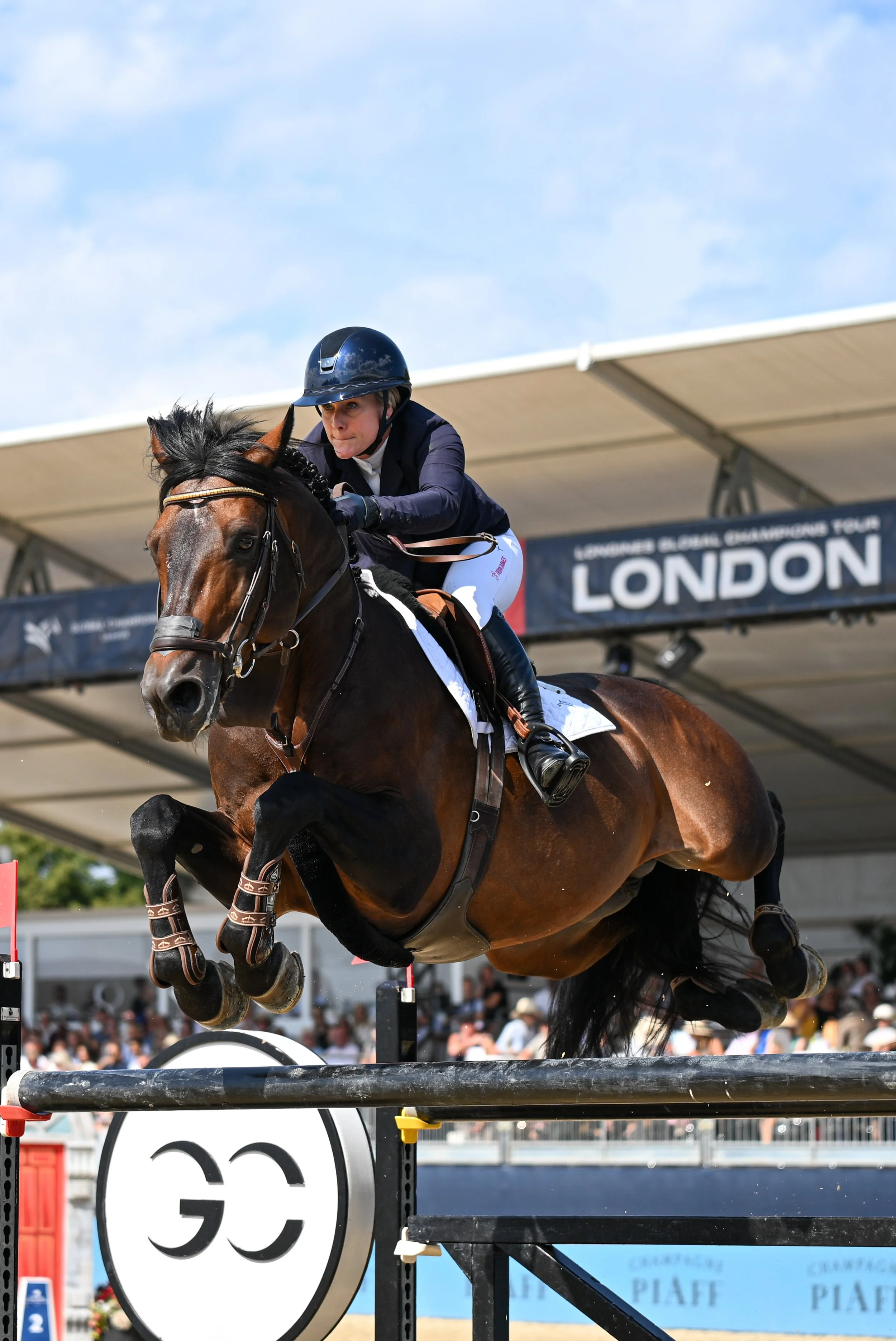
Photo: Louise Anderbjörk
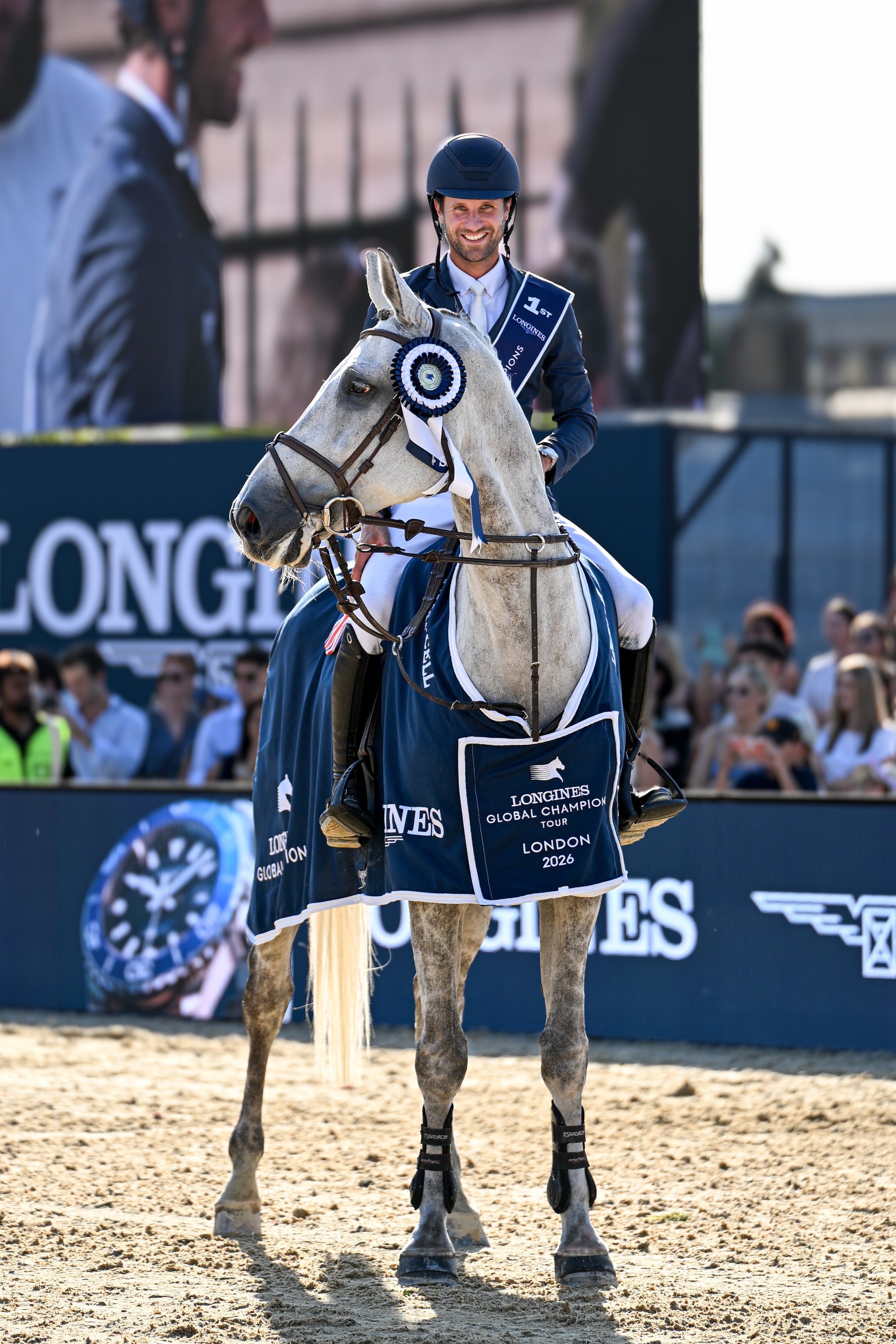
Photo: Louise Anderbjörk
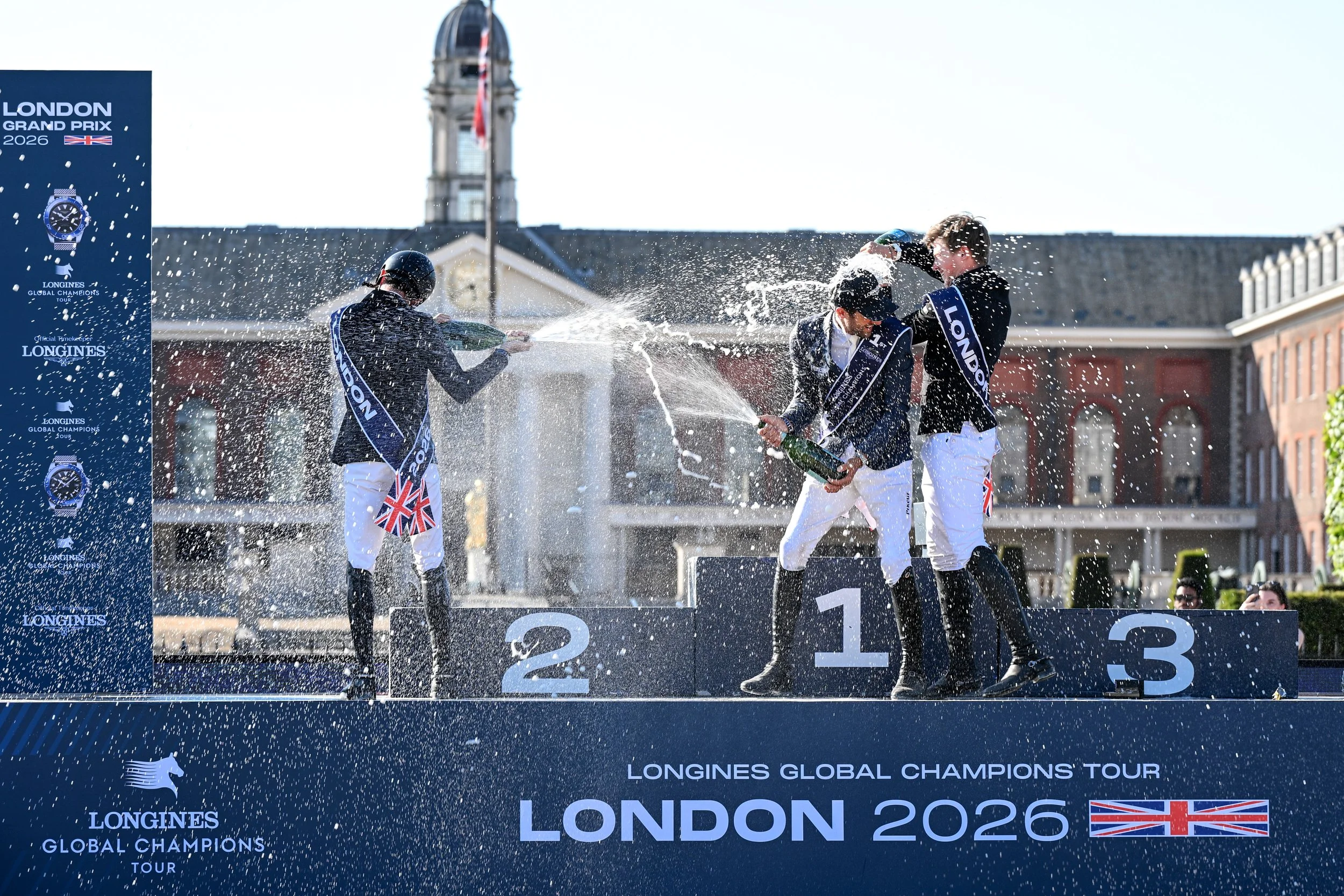
The jump-off was where the pressure really began to build. Bruynseels was first to return and finished with four faults, before Sweden's Henrik von Eckermann and King Edward, having produced an incredible clear in the first round, unfortunately lowered two fences to finish on eight faults. As the class progressed, however, the clear rounds began to arrive, and the competition quickly became a battle against the clock. With the top ranked riders chasing tenths of a second, every turn and every stride mattered.In the end, it was Germany's Christian Kukuk who produced the winning round aboard Checker 47, stopping the clock at a record 42.14 seconds to claim the €1 million prize. Great Britain's Scott Brash finished a remarkably close second in 42.32 seconds, while Harry Charles completed the podium in 43.29 seconds. The margins between the leading riders demonstrated just how little separated these combinations after an afternoon of some of the highest level of showjumping imaginable.
Watching Kukuk, Brash and Charles step onto the podium before heading out on their lap of honour, with the Royal Hospital Chelsea behind them and thousands of spectators celebrating around the arena, was a fitting end to the day. It is difficult to think of many equestrian events where you can capture that combination of elite international sport, history, architecture and the atmosphere of a major city in a single frame. For a photographer, that is what makes the London leg of the Longines Global Champions Tour so special, and what makes me look ahead, already, to LGCT London 2027.
This article was first published in PRISMA’s online edition on the 10 Aug 2026.