
FREEZING THE MOVEMENT
Louise Anderbjörk
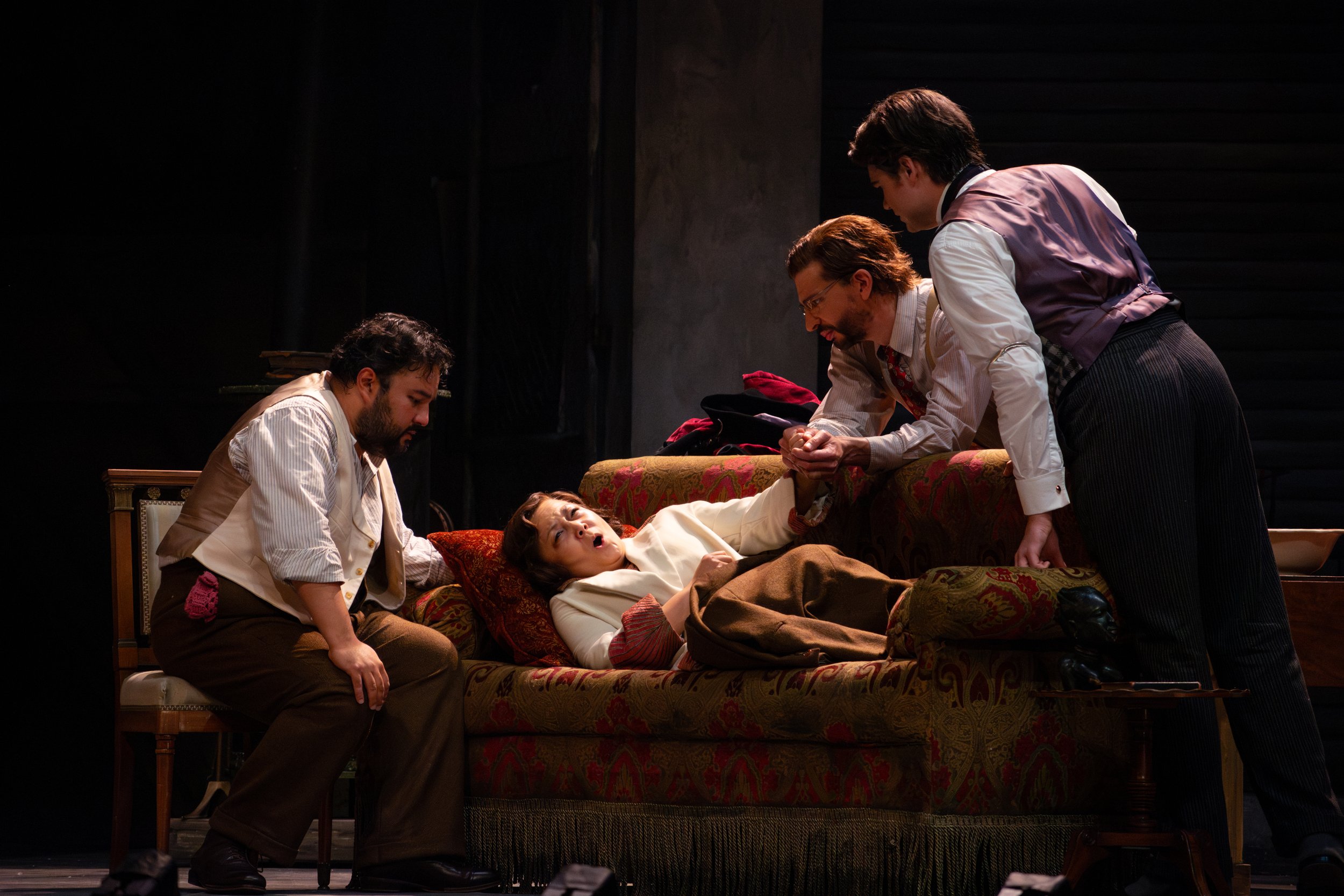
Between October 2025 and February 2026, I was given the opportunity to photograph dress rehearsals for several Scottish Opera productions. The two productions that stayed with me most strongly were Puccini's La Bohème, directed and designed by Barbe & Doucet, and The Great Wave, a world-premiere opera by composer Dai Fujikura and librettist Harry Ross. On paper, they could not be more different. La Bohème is one of the most celebrated operas in the repertoire, following a group of young bohemians whose lives are transformed by love, illness, and poverty in nineteenth-century Paris. The Great Wave, on the other hand, tells the story behind Katsushika Hokusai and the creation of his iconic woodblock print The Great Wave off Kanagawa, exploring artistic ambition, collaboration, and cultural legacy. Yet despite their contrasting subjects, scales, and visual worlds, both productions revealed something that became the focus of my photography: the physicality of opera itself.
Opera is often discussed through its music, voices, narrative, or design. Watching these productions from the stands, however, I became increasingly aware of how much meaning was being carried through movement. Both productions relied on large ensembles whose choreography shaped the atmosphere of each scene.
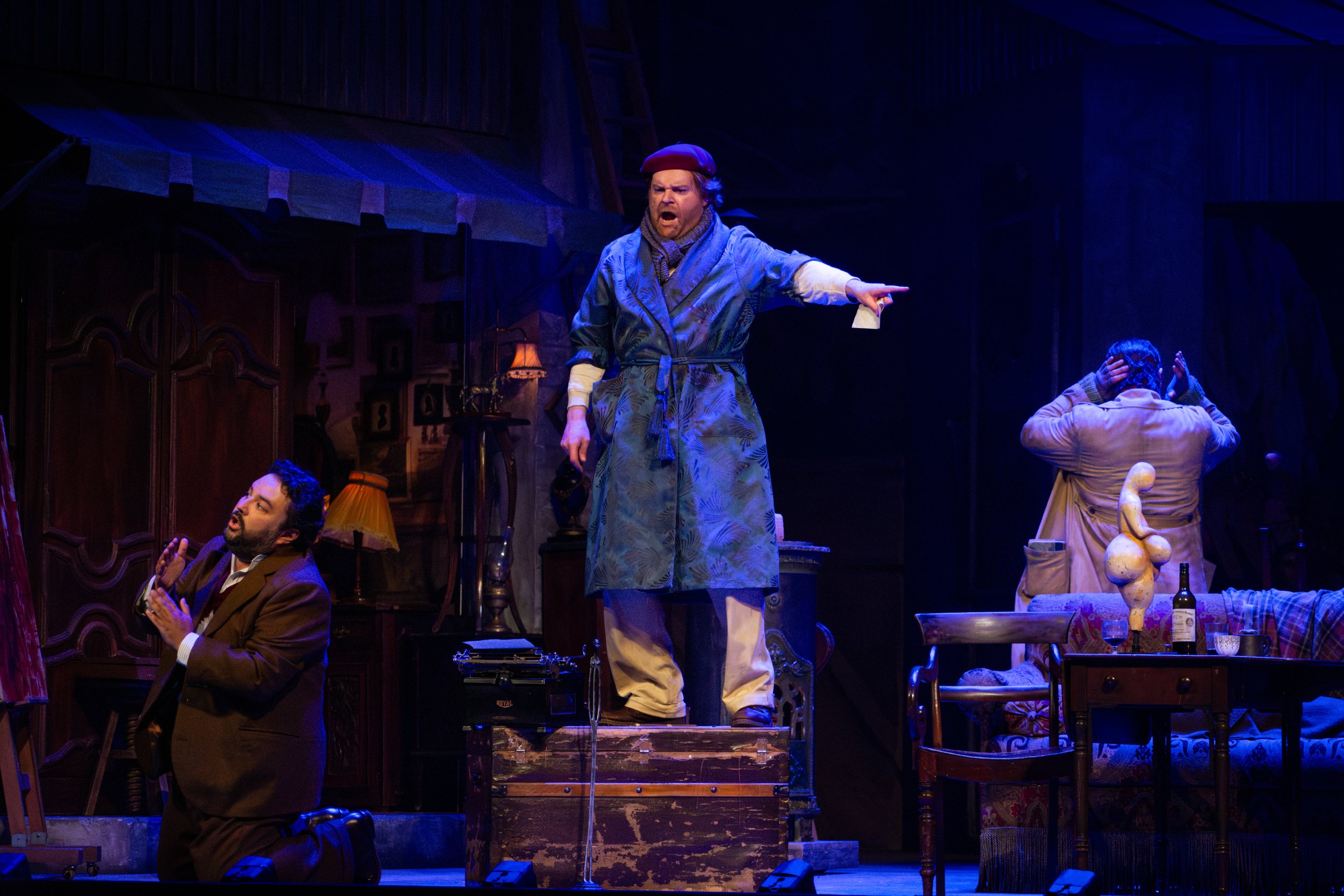
What struck me most was the contrast between ensemble and principal performers in movement, and how their differing momentum came together as one to form a depth on stage. In La Bohème, the stage was frequently filled with carefully orchestrated movement that appeared almost spontaneous. Crowded scenes unfolded with a sense of organised chaos, creating the impression of bustling Parisian streets filled with life beyond the central story. The audience is drawn into that world, feeling as though they are moving alongside the characters.
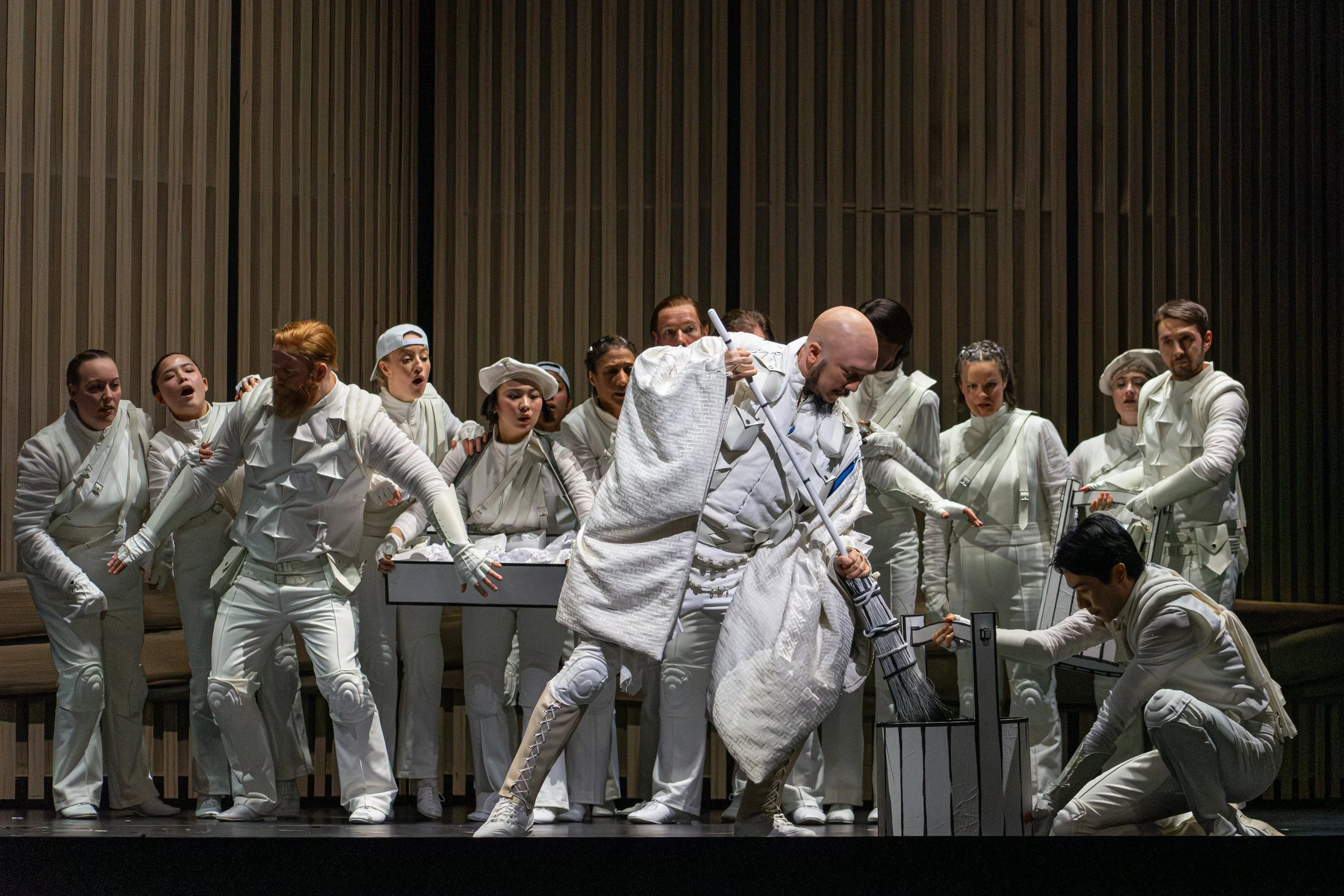
Photo: Louise Anderbjörk
In The Great Wave, the effect was very different. Here, ensembles often moved with precision and collective intent. Large groups advanced, surrounded, and confronted principal performers through highly choreographed sequences. Rather than inviting the audience into the action, these moments encouraged observation. The movement generated tension and momentum, making the principal characters appear isolated within larger social and artistic forces. Although the productions pursued different emotional goals, both demonstrated how rhythm, spacing, and collective movement could define the identity of a performance.
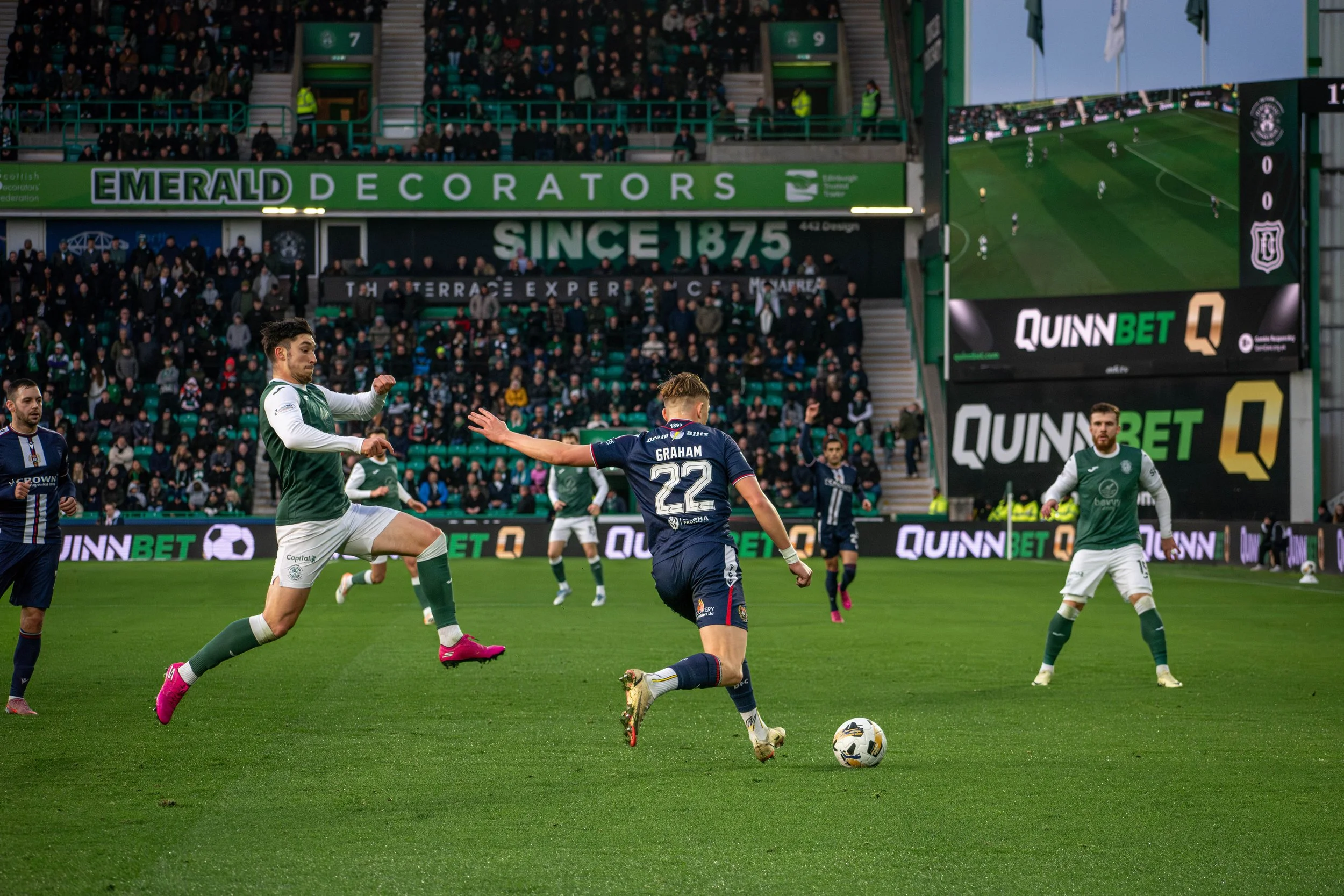
Photographing this constant motion led me to an unexpected technical place with my camera. Alongside theatre photography, I work professionally as a football photographer, and I found myself instinctively borrowing techniques from that practice. At first, I did not realise I was doing it. It was only during an interval, while reviewing images, that I noticed how differently I had been approaching these productions. Once I recognised it, I began to lean into it more deliberately.
The most significant influence came through composition. Sports photography often involves isolating individuals within larger groups while still preserving a sense of the surrounding action. Rather than prioritising the entire stage picture, I found myself focusing on relationships between actors in motion. I worked with shallower depth of field than I would typically use for production photography, allowing individual performers to emerge from the ensemble while still retaining the energy of the wider scene.
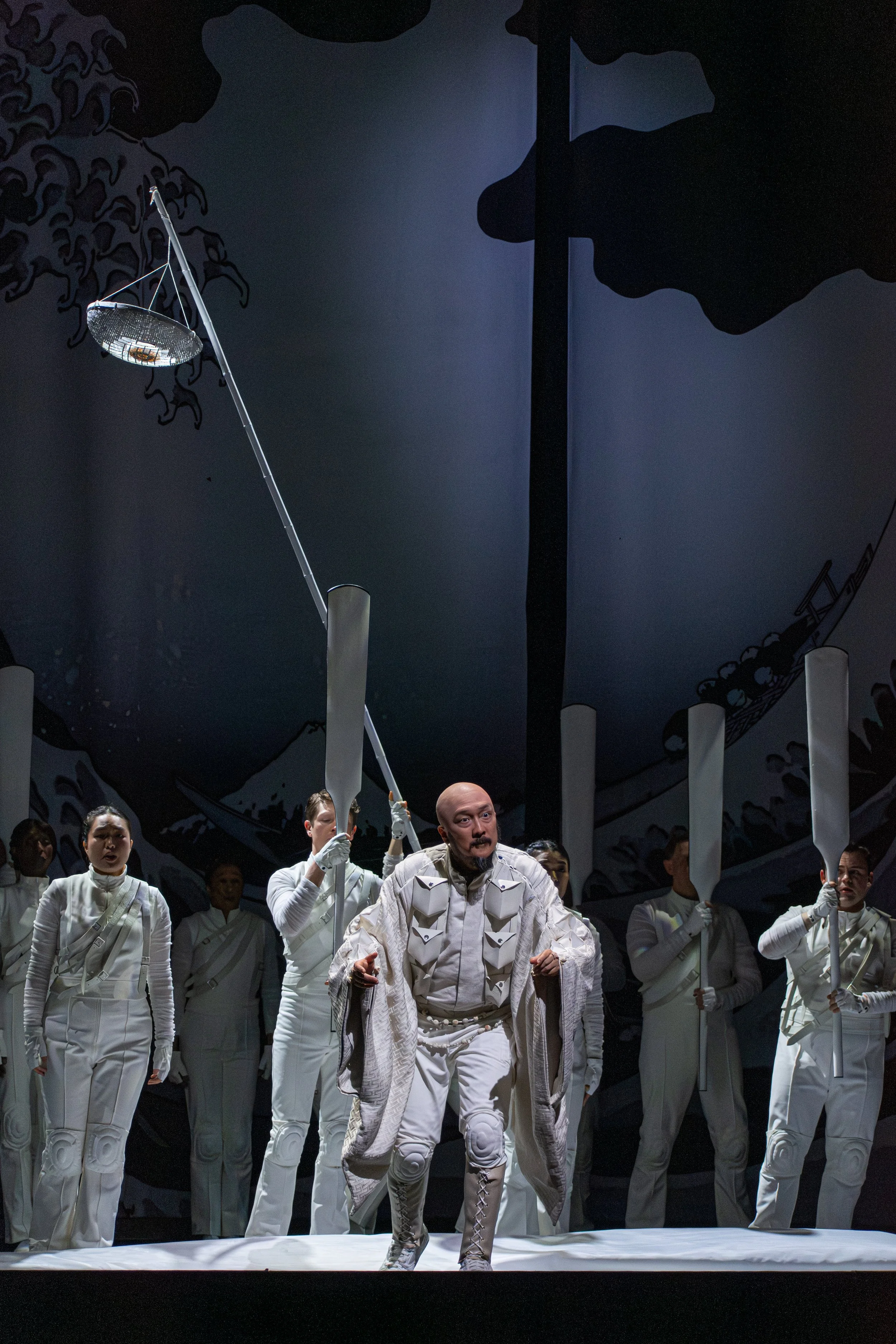
Photo: Louise Anderbjörk
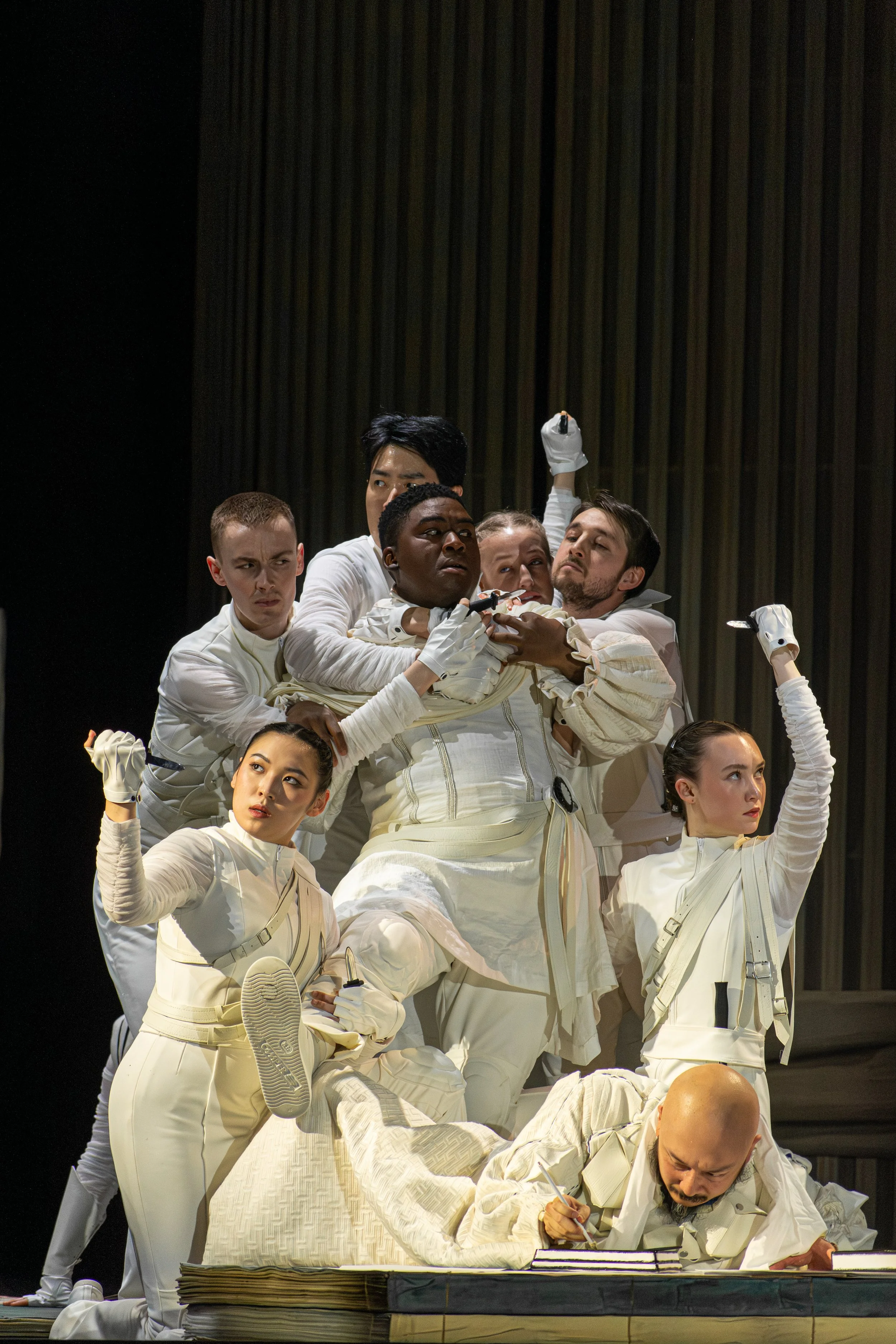
Photo: Louise Anderbjörk
I also began alternating more consciously between landscape and portrait framing. The wider images were designed to capture atmosphere and momentum. Much like photographing an attacking football team moving across a pitch, these frames attempted to freeze a larger collective action within a single moment. The portrait-oriented images, by contrast, allowed individual performers to dominate the frame, giving greater emphasis to gesture, posture, and physical expression. Together, these approaches created a visual rhythm that reflected the productions themselves.
The influence of sports photography extended into my editing process as well. Traditionally, production photography often prioritises clarity, colour, and detailed representation of design elements. For these images, however, I became more interested in directing attention toward movement and performance. I reduced saturation slightly, used subtle vignetting, and avoided making every element of the stage equally crisp. The aim was no longer to document the production as a whole, but to guide the viewer's eye toward the physical action unfolding within it.
Importantly, though, this did not mean abandoning the visual worlds created by the design teams. In both productions, props and scenic elements remained essential to my images. In The Great Wave especially, objects became extensions of movement itself, with performers interacting continuously with poles, screens, canvases, and books. These objects provided a point of reference against which movement could be measured, making gestures feel larger, faster, or more forceful when frozen in time in a photo.
Looking back, these productions reminded me that theatre can be understood differently when viewed through movement rather than narrative. Story, music, and design remain central to opera, but they are carried by bodies in space. By approaching these performances through techniques borrowed from sports photography, I found a new way of seeing the work being done by performers, choreographers, and directors. The momentum we experience as audience members is not accidental. It is rehearsed, constructed, and embodied. Photography offers an opportunity to pause that motion for a fraction of a second and, in doing so, reveal the physical skill close to professional athleticism that helps create the magic of live performance.
This article is part of the PRISMA Editorial Series ‘Stages in Motion’