
COVERING FESTIVALS IN CHINA
Maggie Zhu
Dear PRISMA readers,
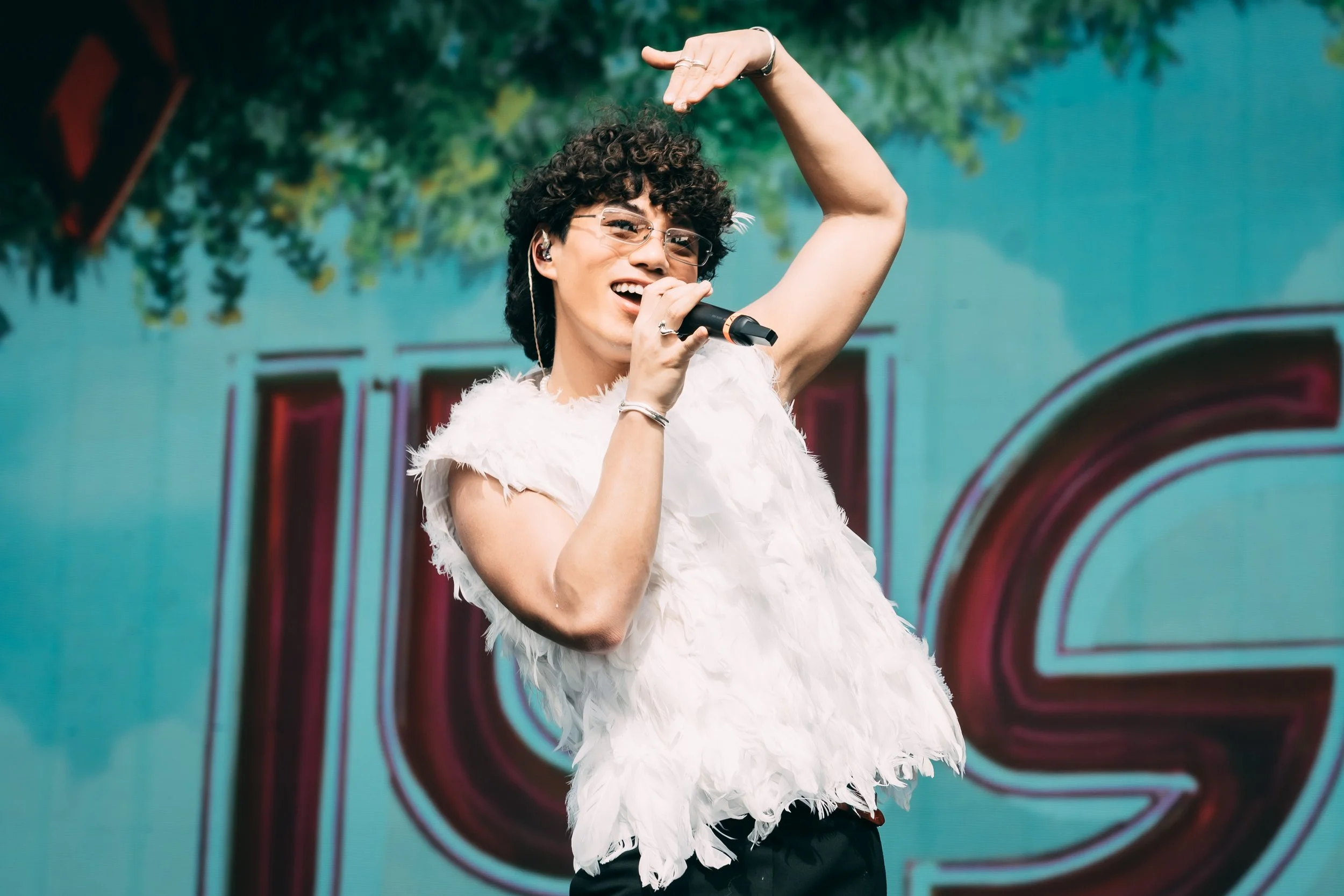
Welcome back to the brand-new PRISMA! Having previously written about my experience as a music photographer, I want to share some of my experiences as a tour photographer from this year. Earlier this spring, I had the chance to photograph two major main-stage festivals in China while on tour with artist Justin Peng. While festival photography anywhere brings its own demands, these shows stood out for me personally. Not only were they among the biggest I have done with Justin, they also marked my first time photographing large-scale festivals in my home country, including a full-circle moment in Shanghai, where I began my concert photography journey.
While this year’s festivals that I attended with Justin were not the largest shows I have ever done, they were meaningful opportunities for me to return to my home country doing what I love. I first met Justin in May the previous year, and since then we have worked closely together across his headline shows, festival appearances, and stages of various sizes. As a photographer, he is a dream subject to capture, as he is deeply talented, expressive, and effortlessly photogenic.
Some artists need time to warm up to feel comfortable in front of the lens, but Justin instinctively performs with a kind of openness that translates directly into strong images. This has allowed our collaboration to quickly grow into a rhythm of trust and creativity. Working with the same artist repeatedly has also shaped how I shoot. With Justin, I know when the signature moments are coming after watching the same set countless times. Anticipating these moments sharpens my timing and allows me to shoot with more precision. There is a joy in knowing an artist so well that you always know what happens next on stage.
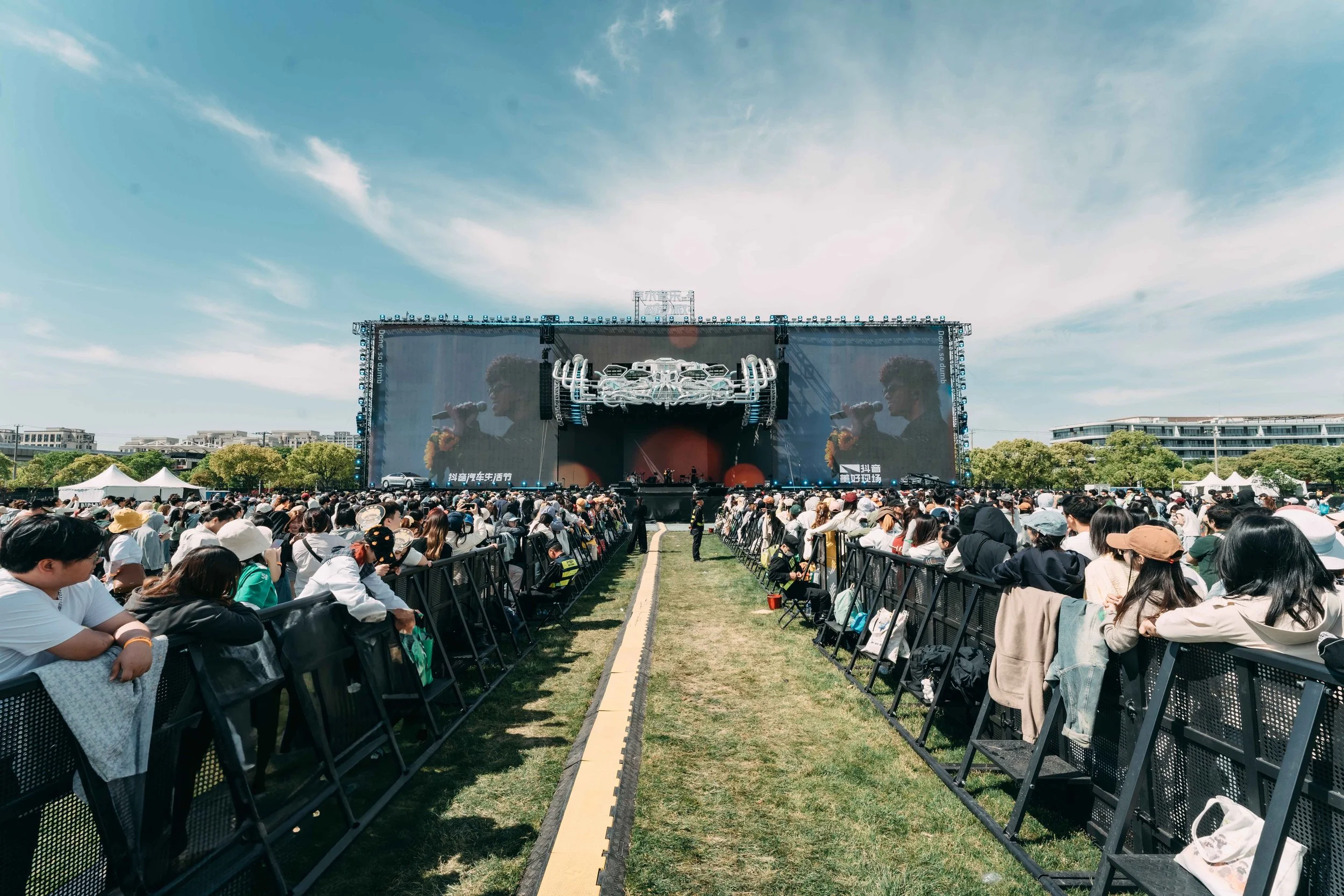
Unlike most of the festivals that I have worked at in the United Kingdom, the festivals that we attended in China each only had one main stage. There were no smaller stages, vendors, or any other form of entertainment. There was no crowd flow, no food or drink stalls, just long stretches of waiting under the heat. This led to a crowd that is dedicated but also hard to please, especially when faced with an artist like Justin who sings entirely in English. By contrast, Western festivals I have photographed, whether in the United Kingdom or Europe, tend to be more fluid. Fans wander between multiple stages, discover new artists, grab food or drinks, and shop at stalls. The energy rises and dips with the day.
Then there is the weather itself. At one of the festivals, the temperature reached 40°C, and the ground was bare dirt instead of grass, turning the whole site into a heat trap. As part of the crew, it is standard to wear all black, but it did not cross my mind how much heat that would absorb. I was also wearing a cap and mask so that I would not get into other photographers’ shots. Midway through the day of running on and off the stage, I found myself with heat stroke, and later editing three thousand photos with a pounding headache and nausea. It was quite a humbling experience. While I usually focus completely on my actual work and on getting the perfect shot, shooting festivals made me realise that I also need to learn to pace myself as a working photographer, to hydrate constantly, and to factor in my own endurance as seriously as my camera settings.
All of this highlighted what shooting a festival really involves beyond clicking the shutter. A photographer must adapt to light and space as every stage has its quirks: harsh daylight, minimal lighting, awkward sightlines to name only a few. You cannot control conditions, but you can control your approach. You have to balance visibility and invisibility, being present enough to capture crucial moments, but discreet enough not to disturb artist or audience. You must build up an ability to work under pressure, because performances are fast-moving and there is rarely a chance to redo a missed moment.
Then, afterwards, thousands of photos must be edited and delivered quickly, often overnight, giving you little time to rest up. Over time, I have developed a few rules for myself when approaching festivals: always shoot a mix of wide crowd shots and intimate artist details; keep gear light enough to move easily; drink water whenever possible; and learn to edit on the go, whether on a train, backstage, or in a hotel room. These sound simple, but in the heat of a 35°C dirt field, with three thousand photos waiting on your laptop, they make all the difference.
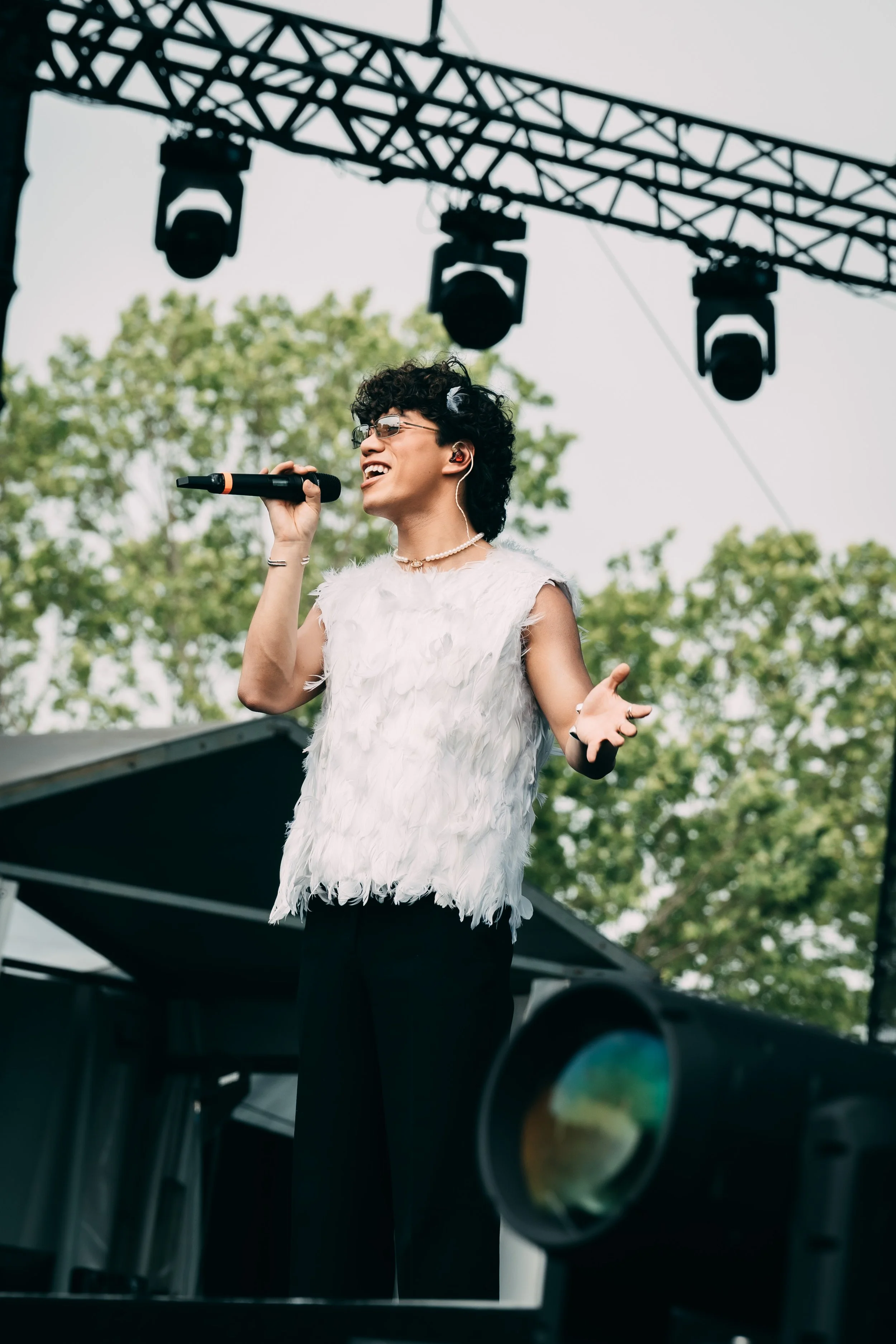
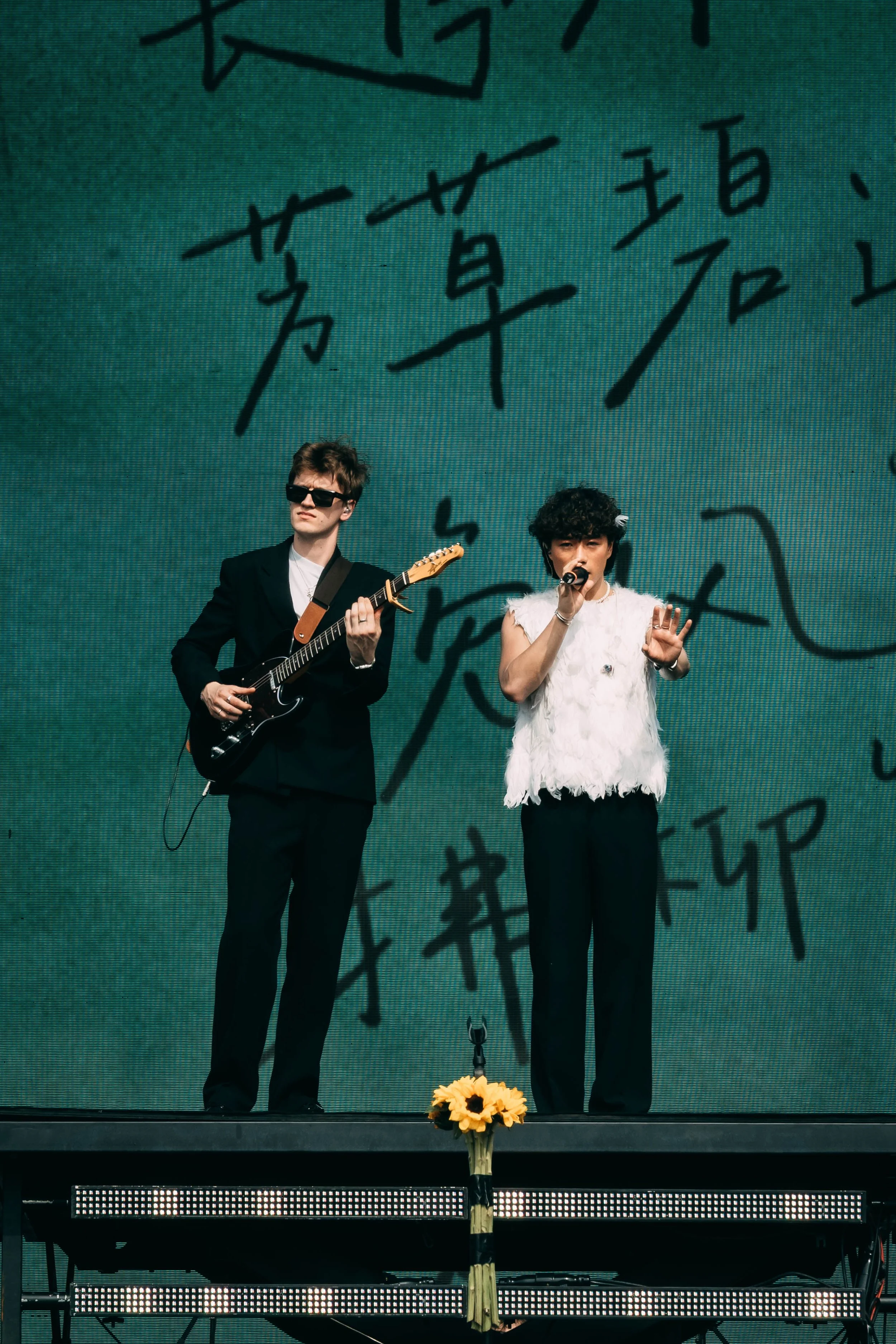
These principles are transferable anywhere, but this China tour taught me to take them more seriously and to add new ones: prepare for the climate, and understand fan culture as much as the artist you are photographing. For me, this tour also held a deeper meaning. One of the festivals took place in Shanghai, the city where I first started shooting concerts. Back then, I was just a student with an entry-level camera, sneaking into small gigs and experimenting with low light. My photos were not perfect, far from it, but they sparked something that eventually grew into a career. To be back in Shanghai, two years later, standing on the main stage with Justin, felt like a full-circle moment.
I could feel the distance between that nervous beginner in the photo pit and the professional I have become. And yet, in some ways, the feeling was the same: the thrill of trying to capture music as it happens, knowing you only get one chance. No matter how many shows I have photographed over the years, it is still mesmerizing to watch an entire crowd erupt in cheers. From the photo pit or side stage, you feel the sound as much as you hear it, thousands of voices merging into one pulse.
That moment never gets old. It is part of what keeps me coming back to live music photography: the reminder that every show, no matter the size or country, is someone’s most anticipated day, and being able to document that energy is a privilege. My time touring in China with Justin Peng did not just give me new images for my portfolio; it gave me perspective. It reminded me that while my role may look the same on paper in any city, the context changes everything. Shooting festivals is demanding, chaotic, sometimes overwhelming, but also deeply rewarding. In the end, the real privilege of being a photographer is to capture not only the music, but also the lived realities around it.
This article first appeared in PRISMA, Issue 26.