
BUCS CONFERENCE FINALS
Louise Anderbjörk
On March 5th, the annual BUCS Conference Finals landed in the seaside town of St Andrews. Over 500 student-athletes from across Scotland gathered to compete for nine coveted trophies across 21 fixtures, all crammed into a single day of top-tier student sport. As one of the official photographers covering the event for Scottish Student Sport, I arrived at 9 a.m. to prepare for the first whistle at 9:30 and the ten hours of sport ahead. Photographing a day like this is as much about stamina and adaptability as it is about sport knowledge, as each sport brings its own pace, angles, and challenges, demanding constant adjustment behind the lens.
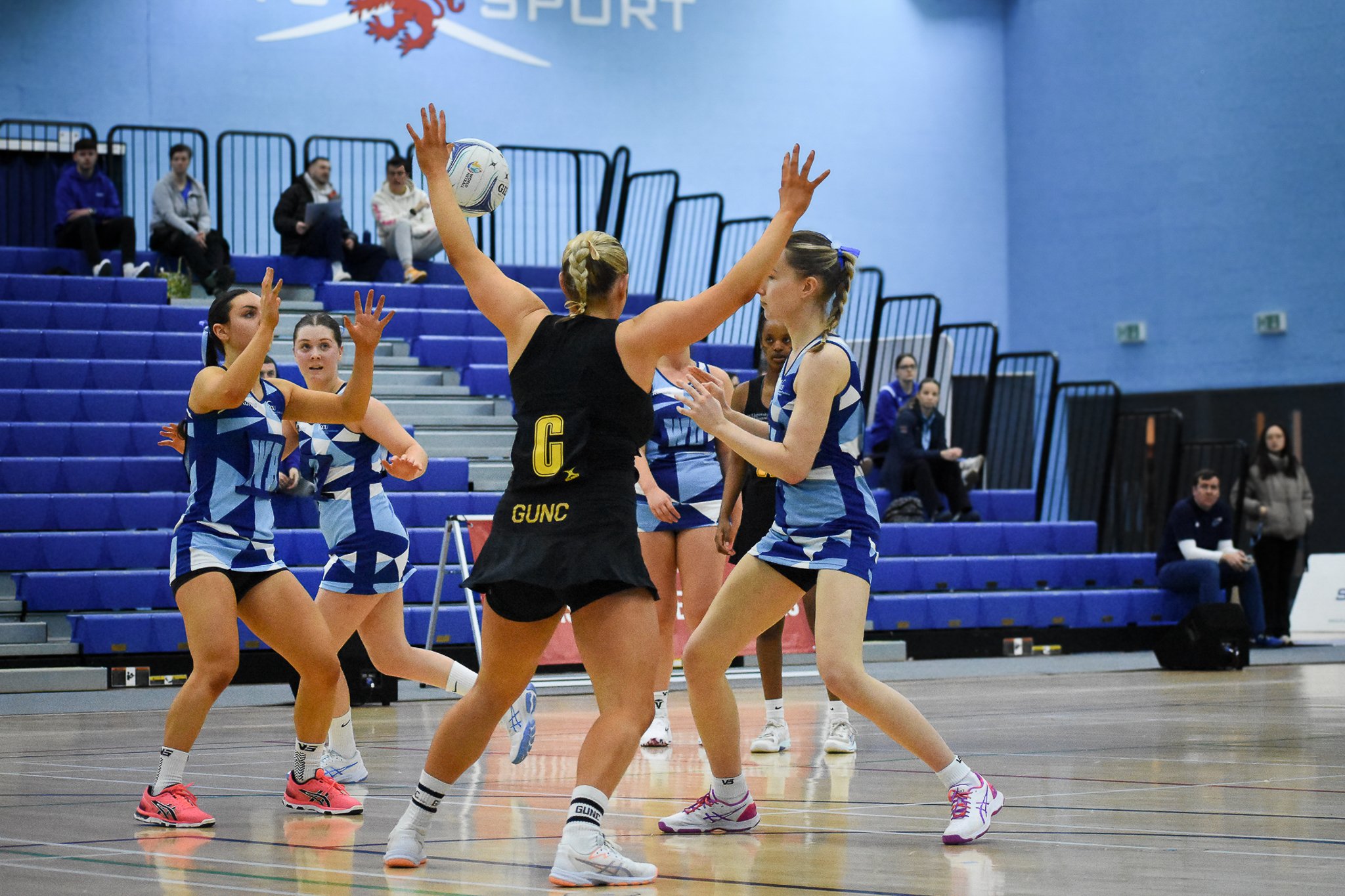
The day opened on the netball court with the EY Netball Women’s Trophy, where Glasgow Caledonian secured a 50-32 victory. Having never photographed netball before, my preparation involved reading up on rules and careful observation of more seasoned photographers. Netball is all about speed and precision, with players restricted to specific zones and the ball flying through rapid, short passes. At first, the pace was difficult to follow, but once I understood the patterns, the sport opened up visually. By anticipating moves rather than reacting to them, I was able to capture the dynamic mid-air interceptions, defensive blocks, and passing sequences that represent the sport, which is proof of how vital it is to understand the rules of the game you’re shooting.
From there it was a quick sprint to the BT Basketball Women’s Cup Final between the University of St Andrews and Glasgow, where the hosts took the win 60-53. Indoor sports like basketball bring their own obstacles, including harsh artificial lighting that often complicates colour balance and exposure. After some trial and errors with ISO and white balance, though, the rewards were worth it. Basketball offers so many cinematic moments to the photographer, like a player leaping for a rebound, a clean three-pointer, or, if you’re lucky, a slam dunk frozen mid-air.
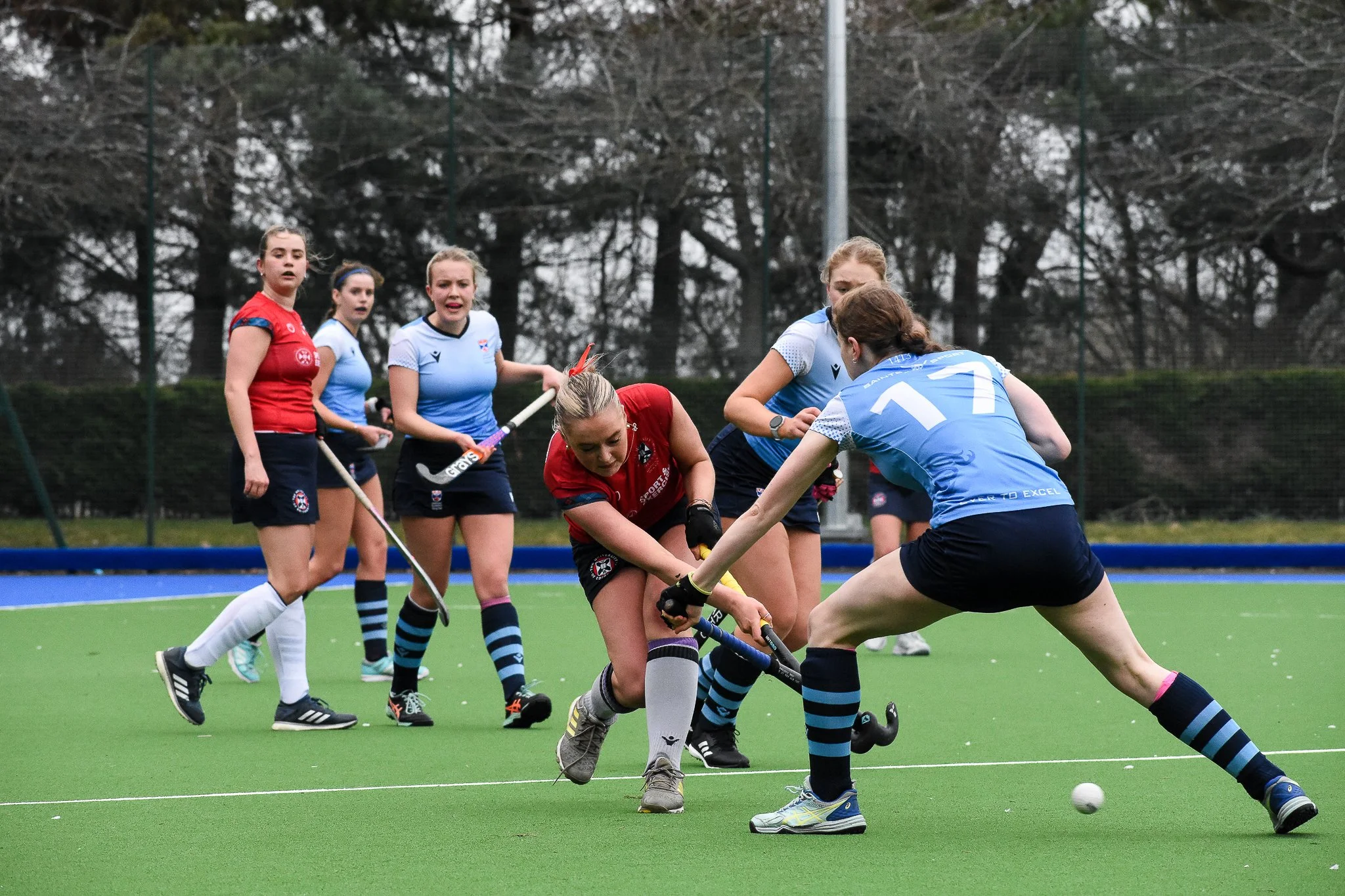
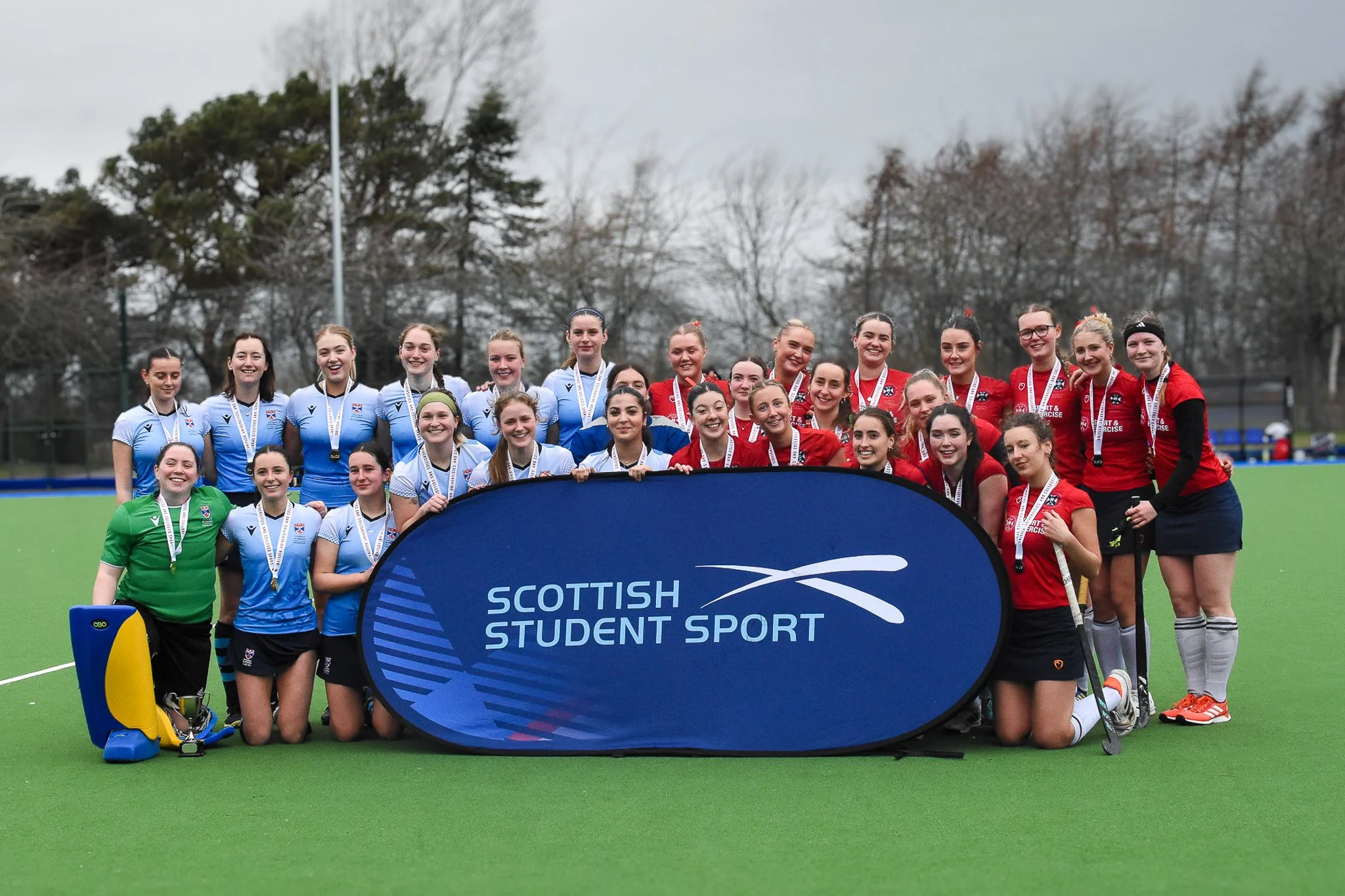
Equally, the proximity of the court to the crowd adds an exciting atmosphere to the photographs, with emotions spilling across the sidelines. Then, the morning’s fixtures were done, and lunch doubled as an editing sprint to get ahead on delivery. The afternoon took us outdoors, where strong Scottish winds and rain greeted the ICG Women’s Hockey Trophy Final between St Andrews and Edinburgh. Still, St Andrews showed incredible play ending in a 3-1 win despite the weather. Photographing in those conditions was a match in itself. When the wind literally shifts your balance mid-shot, every frame is hard earned.
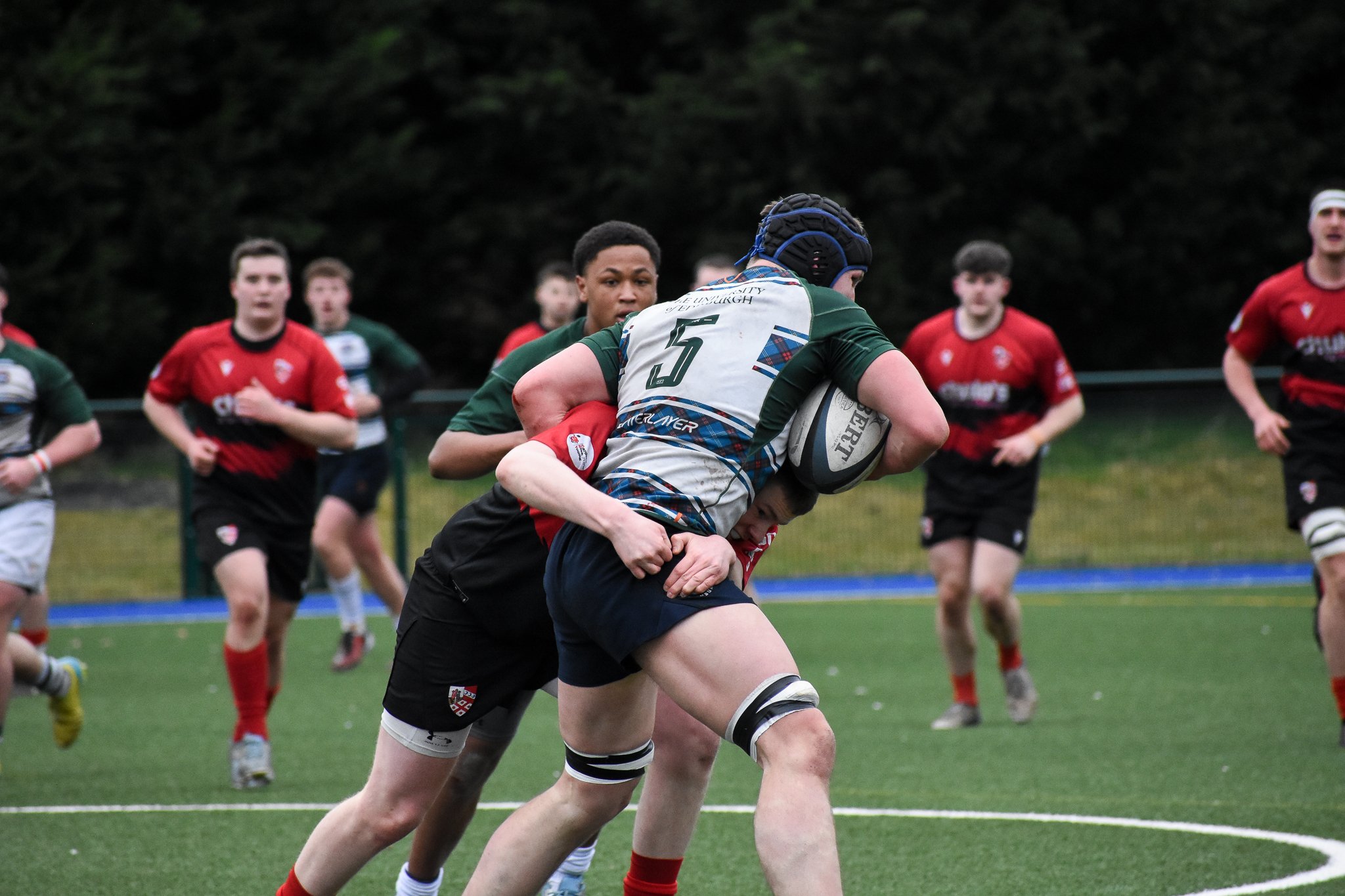
Additionally, the unique low-ball play in hockey meant that you as the photographer equally had to get on lower levels to capture clean, symmetric angles, often while dodging a wayward strike. By the end of the hockey match, the crowd outside had grown, with anticipation clearly building for the day’s headline act: the Men’s Rugby Cup Final between the University of Edinburgh and Edinburgh Napier. The winds had not calmed and the temperatures were still uncomfortably low, but the energy was electric nonetheless. For 80 minutes, both teams displayed fantastic athleticism and determination until the University of Edinburgh finally sealed a 26-17 victory.
The pitch invasion that followed, with supporters storming onto the turf to embrace their team, was one of those moments you live for as a sports photographer. The sheer emotion of victory, captured in hugs, tears, and cheers, told the story better than any other photo could. Yet, rugby is endlessly engaging to shoot because of its variety. Scrums demand a low, compressed frame, while lineouts push you vertical in an instant. The ball moves unpredictably, requiring anticipation and patience, but when it clicks the results are so powerful. It is also a sport where the emotional stakes are always visible in players and supporters alike which make the photographs resonate far beyond the scoreline.
As the celebrations subsided, I secured the victory photos before packing up at 6 p.m. The on-site work was over, but the evening still stretched ahead with editing and delivery for publication, finally wrapping up around 10pm. Long days like this are part of the rhythm of sports photography, but also what makes it so fulfilling and memorable as a job. The Finals offered a fantastic crash course in adaptive photography which will always lie at the very centre of sport coverage.
This article first appeared in the PRISMA Issue 26.